The Agami Heron: Where to See Costa Rica’s Most Elusive Heron
The Agami Heron is one of Costa Rica's most striking and elusive wetland birds. Where to see it, when to go, and why it is so hard to find.
Scientific name: Agamia agami · Family: Ardeidae · Conservation status: Vulnerable (IUCN)
The Agami Heron (Agamia agami) is one of Costa Rica’s most striking and elusive wetland birds. Sometimes called the Chestnut-bellied Heron, it is the only species in the genus Agamia. Its extraordinary plumage, secretive behavior and preference for densely vegetated wetlands make an encounter memorable even for experienced birders.
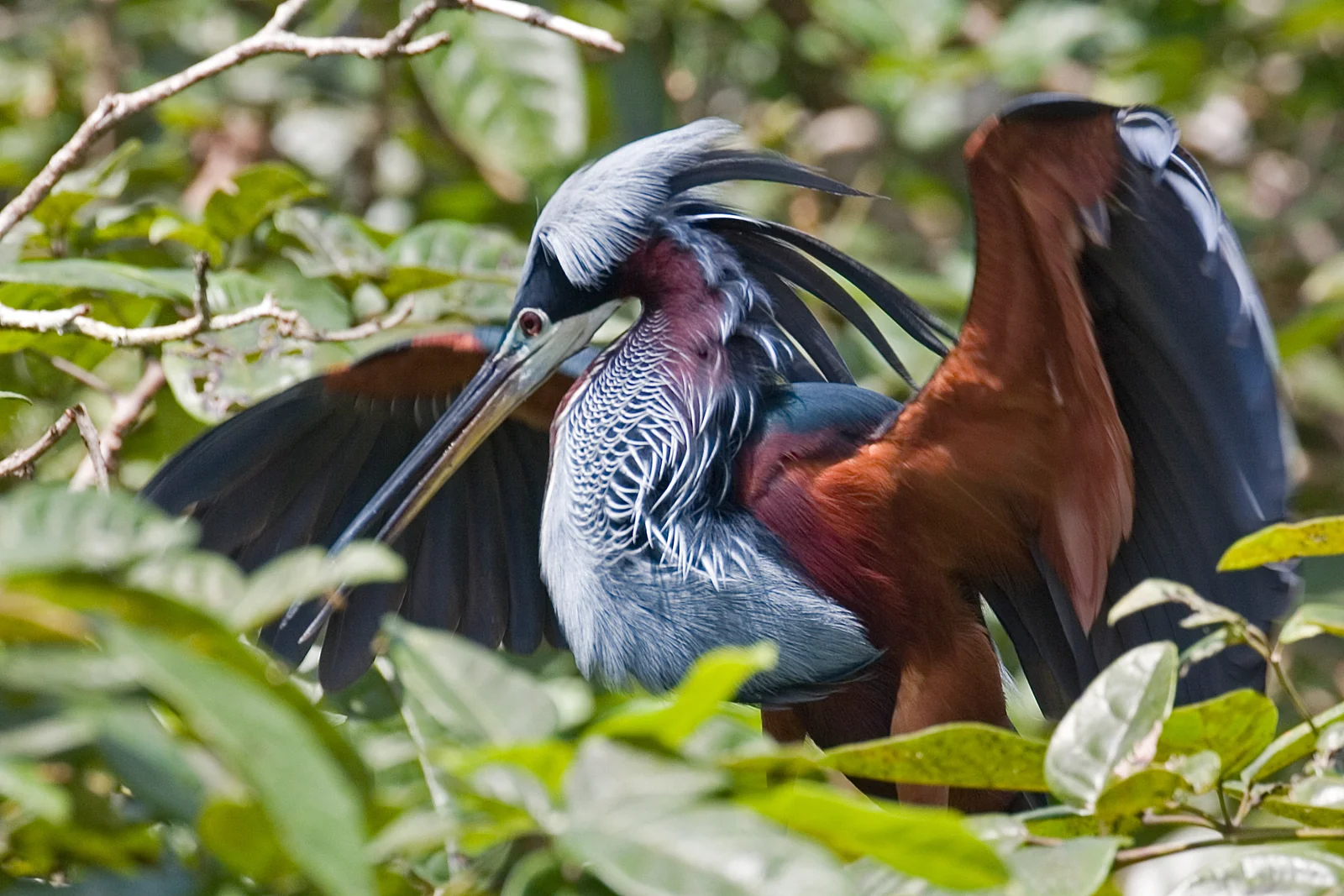
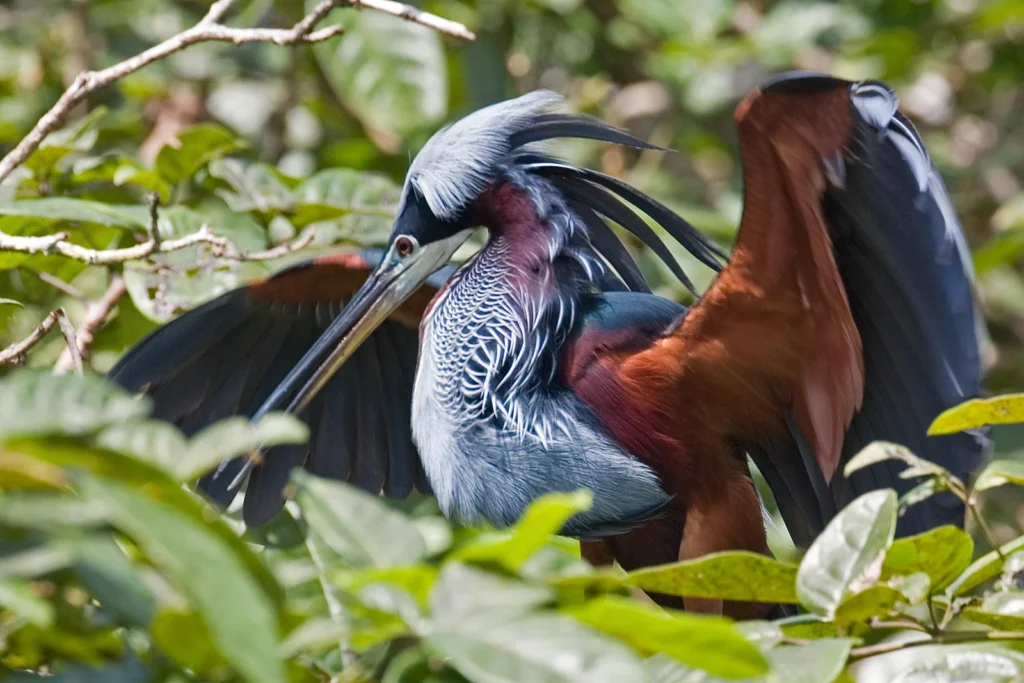
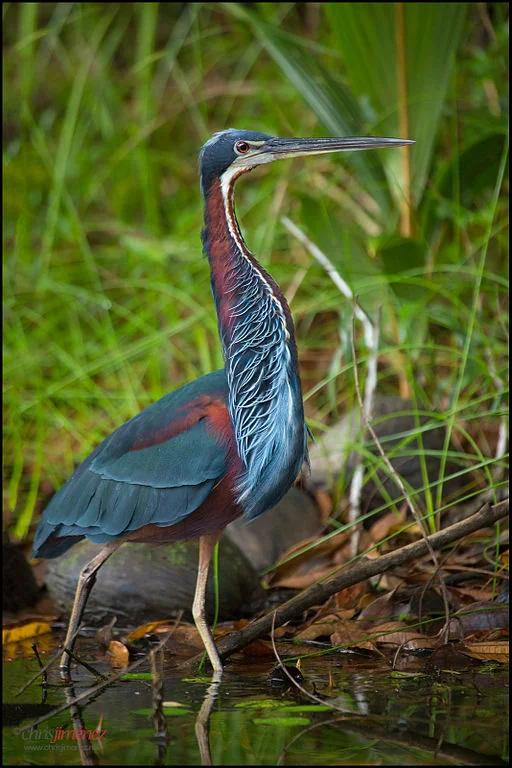
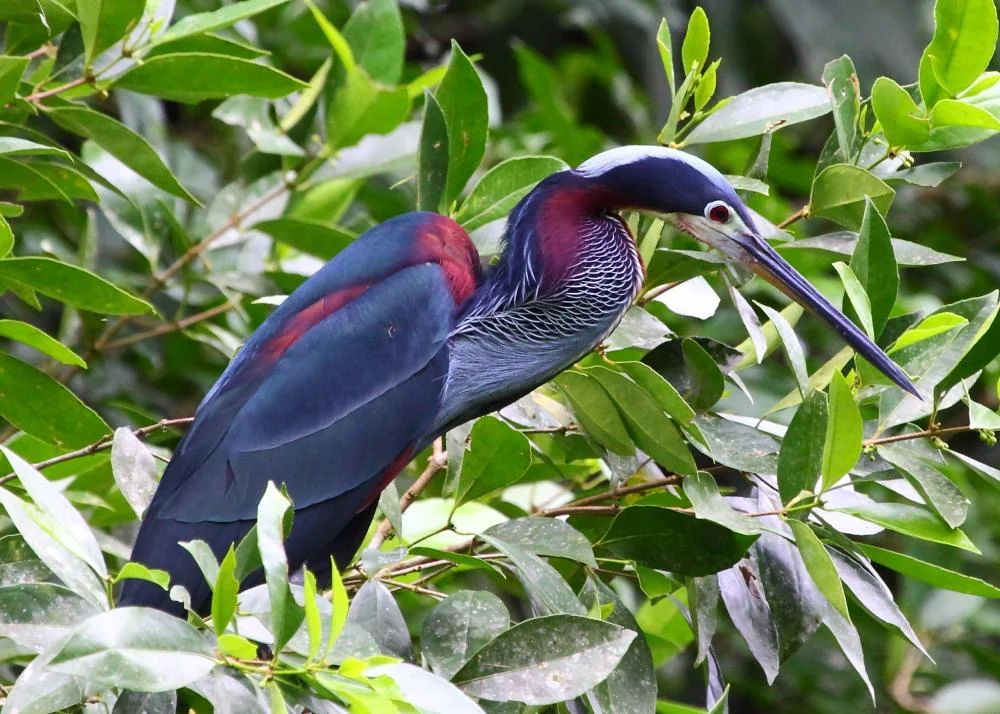
Adult Agami Herons have rich chestnut necks and underparts, dark glossy wings and remarkably long, slender bills. During the breeding season, adults become even more impressive, developing pale blue to silvery ornamental plumes and intensified colors around the head and face. Yet despite this colorful appearance, the Agami Heron can virtually disappear into the shaded vegetation it prefers.
Range and Habitat of the Agami Heron
The Agami Heron range extends from southern Mexico through Central America and into tropical South America. In Costa Rica, Agami Herons primarily inhabit lowland wetlands and forested waterways.
Typical Agami Heron habitat includes swamp forest, flooded forest, quiet streams, lagoons, mangroves and other freshwater wetlands surrounded by dense vegetation. Unlike many Costa Rican herons that readily feed in exposed marshes, pastures or along open riverbanks, Agami Herons prefer secluded water with plenty of cover.
Conservation Status
The Agami Heron is classified as Vulnerable by the IUCN. Although the species has an extensive geographic range, relatively few large breeding colonies exist, making their protection particularly important.
Habitat loss and degradation of tropical wetlands remain significant concerns. Large nesting colonies can concentrate hundreds of birds in a relatively small area, meaning disturbance or habitat changes at an important Agami Heron colony can potentially affect a substantial breeding population.
Costa Rica’s protected areas and private reserves therefore play an important role in conserving both nesting and feeding habitat.
How to Identify an Agami Heron
At approximately 66 to 76 centimeters (26 to 30 inches) long, the Agami Heron is a medium-sized heron. It has relatively short legs and an exceptionally long, thin bill, giving the bird a distinctive profile.
Adults combine chestnut underparts with dark, glossy upperparts and contrasting pale ornamental feathers. During breeding, the silvery-blue plumes become especially prominent.
Young birds are considerably less colorful. Juveniles are primarily brown, with paler and streaked underparts, but the characteristic long bill remains an important identification clue.
Agami Heron Diet and Feeding
The Agami Heron diet consists primarily of fish, although frogs, small reptiles and other aquatic prey may also be taken. Its exceptionally long bill and neck allow it to strike at prey while remaining along the edge of the water or on an overhanging perch.
Rather than actively walking through an open marsh, an Agami often waits quietly beside shaded water. It may remain motionless for long periods before making a rapid strike. This feeding strategy fits perfectly with its secretive nature.
Behavior: Why Is the Agami Heron So Elusive?
Outside the breeding season, Agami Herons are often solitary and remarkably difficult to detect. They favor shaded waterways and swampy forest rather than the open wetlands where birders typically expect to find herons.
They are also quiet birds and tend to retreat farther into vegetation when disturbed.
During the breeding season, however, their behavior changes dramatically. Birds that spend much of the year dispersed can gather at communal nesting sites, sometimes forming spectacular colonies containing hundreds of birds. This seasonal concentration creates an unusual opportunity to observe a species that is otherwise notoriously difficult to find.
Agami Heron Nesting in Costa Rica
Costa Rica has played an important role in what scientists know about Agami Heron nesting.
For many years, one of the country’s best-known colonies was at Pacuare Reserve on the Caribbean coast. Researchers confirmed nesting there in the early 2000s, and Pacuare has monitored the colony since 2004. Birds nested around a secluded lagoon reached by walking through the rainforest, and visitors could observe the colony while following strict protocols designed to minimize disturbance.
The colony also provided researchers with rare opportunities to study Agami courtship and breeding behavior. In one documented study, researchers counted 266 nests at the Pacuare lagoon.
In recent years, however, the pattern has become less predictable. Costa Rica Focus guides observed a dramatic reduction in the number of Agamis arriving at the traditional site during one breeding season, with only a few birds appearing much later than expected. The reason for that change remains uncertain.
Then came a fascinating development.
Agami Island: A New Costa Rican Rookery
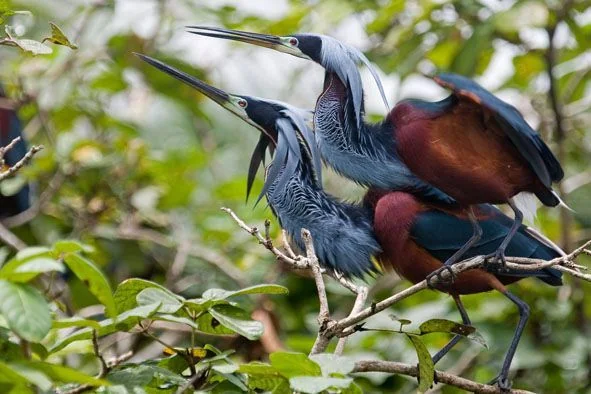
In May 2025, a previously unknown Agami Heron rookery was discovered near Katira de Guatuso in northern Costa Rica. Today, Agami Island Nature Reserve protects approximately 30 hectares of wetland habitat around the colony and provides controlled opportunities to observe the birds.
The site has quickly become one of the most reliable seasonal places for seeing the Agami Heron in Costa Rica, particularly when the birds congregate to breed.
At Agami Island, birds begin gathering around May. Nest building, egg laying, incubation and chick rearing continue through the following months, with juveniles gradually becoming independent and the colony dispersing toward the end of the breeding period. Agami Island reports the main nesting spectacle from approximately May through September.
This is an important distinction for birders. Seeing one secretive Agami along a forested waterway is very different from visiting an active rookery where many birds have gathered to breed.
Where to See the Agami Heron in Costa Rica
There is no single year-round location where an Agami sighting can be guaranteed. Where and when you search matters considerably. This elusive heron is found more often in private reserves than in a national park.
Agami Island, Guatuso
During the breeding season, Agami Island near Katira de Guatuso currently offers one of Costa Rica’s most reliable opportunities to observe significant numbers of Agami Herons. The concentration of breeding birds also provides unusual opportunities for bird photography and observation of nesting behavior.
Pacuare Reserve
Pacuare Reserve has tremendous historical and conservation importance for the species. Its Agami research program dates to 2004, and visitors can observe the nesting site as part of that program. Pacuare is also an internationally important nesting area for Leatherback Sea Turtles.
Caño Negro Wildlife Refuge
Caño Negro Wildlife Refuge in northern Costa Rica is another location where Agami Herons can be encountered, but expectations should be different. At Caño Negro, birders are generally searching for individual birds rather than visiting a large known rookery.
A Caño Negro boat tour allows birders to explore wetland habitat that is difficult to access from land. Careful searching along densely vegetated waterways can occasionally produce an Agami, although sightings should never be considered guaranteed.
La Selva and Sarapiquí
Agami Herons also occur in swampy areas around La Selva Biological Station and elsewhere in the Sarapiquí lowlands. These forested wetlands provide excellent Agami Heron habitat, but the birds’ secretive habits can make them exceptionally difficult to locate.
Birding at Caño Negro Wildlife Refuge
Although Agami Herons are only one possibility, Caño Negro can be a good place to find this species. The Caño Negro Wildlife Refuge protects an important system of wetlands in Alajuela Province near Los Chiles, on the border between Costa Rica and Nicaragua. Water levels change considerably between the rainy and dry season, creating habitat for resident species as well as large numbers of migratory birds.
Depending on season and conditions, birders may encounter Jabiru, Sungrebe, Black-collared Hawk, Nicaraguan Grackle, kingfishers, herons and other wetland birds. Caimans, crocodiles and river turtles are also among the wildlife found in the region.
For birders staying around La Fortuna and the Arenal Volcano area, Caño Negro can be visited as a full-day birding excursion, although serious birders may prefer incorporating the northern wetlands into a broader itinerary.
When Is the Best Time to See an Agami Heron?
Agami Herons can occur in Costa Rica throughout the year, but individual birds away from breeding colonies can be extremely difficult to find.
For birders hoping to see larger numbers and observe breeding activity, approximately May through September currently provides the strongest opportunity at Agami Island. Because colony locations and seasonal behavior can change, current local information is especially valuable when the Agami Heron is a priority species.
Frequently Asked Questions About the Agami Heron
What is an Agami Heron?
The Agami Heron is a colorful, secretive heron found in tropical wetlands from Mexico through Central America and much of northern South America. It is the only member of the genus Agamia.
Where can you see the Agami Heron in Costa Rica?
Agami Herons can be found in several lowland wetland areas. Agami Island near Katira de Guatuso currently offers an excellent seasonal opportunity during nesting, while individuals may also be found at Caño Negro Wildlife Refuge, La Selva and other suitable Caribbean lowland wetlands.
Why is the Agami Heron so hard to see?
Its behavior and habitat make it difficult to find. The species prefers shaded, densely vegetated wetlands and often remains concealed along forested waterways.
When is the best time to see the Agami Heron?
For an opportunity to see birds at an active breeding colony, May through September is currently the key period at Agami Island. Individual birds may be encountered at other locations throughout the year.
What other birds can you see at Caño Negro?
Caño Negro supports an exceptional variety of wetland birds, including Jabiru, Sungrebe, Black-collared Hawk, Nicaraguan Grackle, kingfishers and numerous herons, egrets and migratory species.
Do you need a boat to see the Agami Heron?
Not always. At Caño Negro, a boat provides access to excellent wetland habitat and improves the ability to search secluded waterways. Other Agami locations are accessed differently, so the best approach depends on the site.
The Agami Heron: Where to See Costa Rica’s Most Elusive Heron
Get a Free Quote
See Most Recent Posts
How to Choose a Birding Tour Company in Costa Rica
Guides, group size, local knowledge, flexibility and in-country support matter more than the itinerary. What to look for and what…

The Agami Heron: Where to See Costa Rica’s Most Elusive
The Agami Heron is one of Costa Rica's most striking and elusive wetland birds. Where to see it, when to…

Birding in Costa Rica in May: Weather, Bird Activity, and
May is a strong month for birding in Costa Rica — breeding activity, soft photography light, quiet reserves, and better…