Swainson’s Hawk, sometimes “grasshopper hawk” or “locust hawk”
Swainson’s Hawk (Buteo swainsoni) is a long‑distance migratory raptor of open country, breeding in western North America and wintering mainly in Argentina, and it is only a rare vagrant to Costa Rica rather than a regular species there.

Buteo swainsoni
Scientific Name
Accipitridae
Family
Accipitriformes
Order
Range and Habitat of Swainson’s Hawk, sometimes “grasshopper hawk” or “locust hawk”
Geographic Range
Breeds in open country from central and western Canada through the western United States into northern Mexico. Winters primarily in the pampas and agricultural landscapes of Argentina, with records across much of southern South America.
Migratory Patterns
One of the most spectacular long‑distance migrants among North American raptors, moving in huge kettles through Central America to reach South America. Many individuals travel over 10,000 km between breeding and wintering areas.
Preferred Habitat
Favors open grasslands, prairies, shrub‑steppe, ranch country, and agricultural areas, often with scattered trees or shelterbelts for nesting.
Altitude Range
Mostly lowland to mid‑elevation open landscapes on breeding grounds; in Central America migrants are often seen soaring high over ridges and lowlands, but detailed Costa Rica‑specific elevation bands are not emphasized in broad overviews.
Costa Rica Habitat
Not a regular breeding or wintering species; recorded only as a rare migrant or vagrant passing through Central America, so there are no consistent province‑level strongholds in Costa Rica noted in global summaries.
Conservation Status
Conservation Status
Least Concern
Population Status
Overall global population considered large and currently stable, although local declines have been noted where habitat has been altered.
Loss of nesting trees and conversion of native grasslands to intensive agriculture, exposure to agricultural pesticides, especially in South American wintering areas where insecticide use can reduce prey and cause poisoning.
Conservation efforts
Protection of key breeding and wintering habitats in North and South America, including some grassland reserves and riparian corridors.
Primary Threats
Loss of nesting trees and conversion of native grasslands to intensive agriculture, exposure to agricultural pesticides, especially in South American wintering areas where insecticide use can reduce prey and cause poisoning.
Swainson’s Hawk, sometimes “grasshopper hawk” or “locust hawk” Identification
How to Identify the Species
Rarity Level:
CommonBest Viewing Times:
Size
Length about 43–56 cm; Weight roughly 500–1700 g (1.1–3.7 lb); Wingspan about 117–137 cm
Plumage
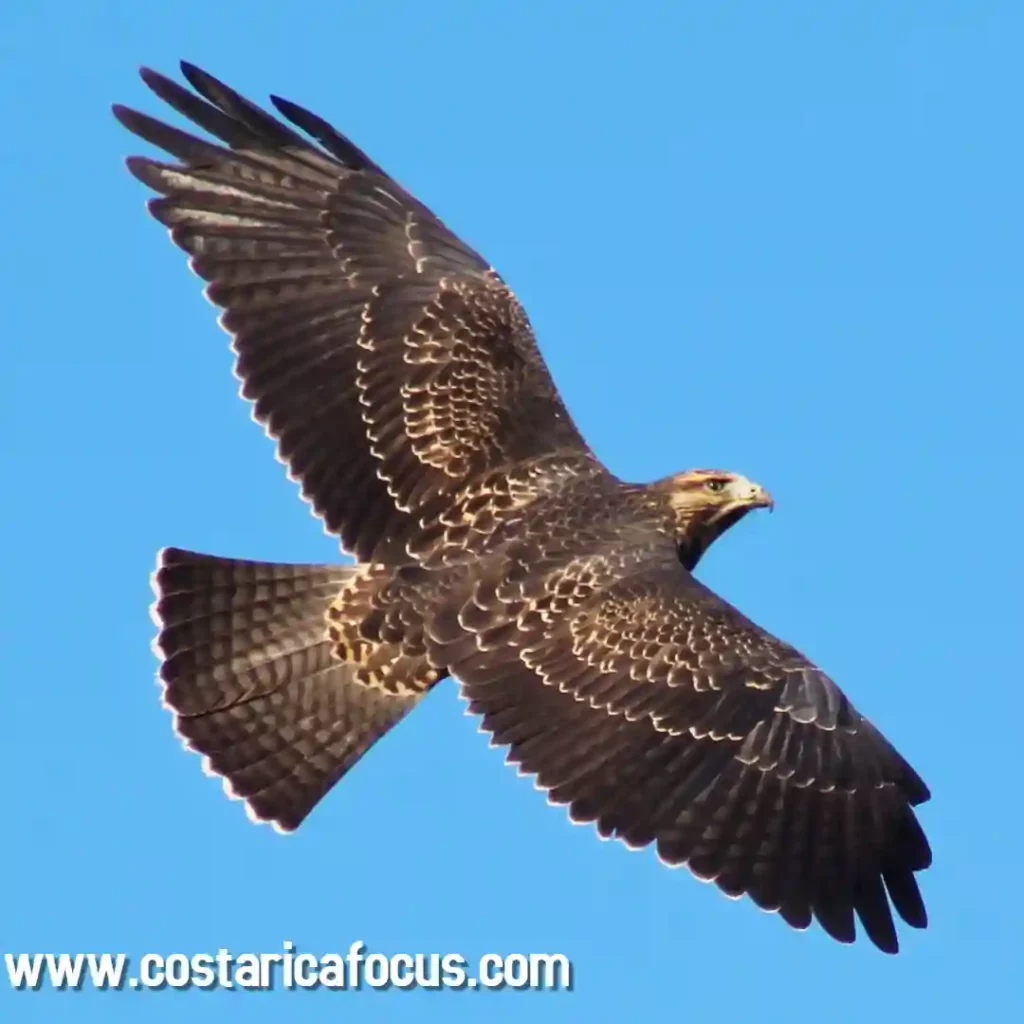
Slim buteo with long, narrow wings; most light‑morph birds show a brown back, darker chest or bib, pale belly, and contrasting dark flight feathers with paler wing linings.
Distinctive Features
Long pointed wings that often form a shallow dihedral and look somewhat falcon‑like in glide. Relatively thin body for a Buteo and a fairly long tail.
Sexual Dimorphism
Females average larger and heavier than males, as typical for raptors, but plumage patterns overlap strongly, so sexing in the field relies mostly on size and behavior.
Diet and Feeding Behavior
Primary Diet
- During breeding: small mammals (ground squirrels, voles, mice), small birds, reptiles, and occasionally bats. Outside breeding and on migration: largely large insects (grasshoppers, crickets, locusts, caterpillars, dragonflies).
Foraging Techniques
- Soars and glides over open areas scanning for prey, hunts from perches, and frequently catches insects in flight.
Feeding Times
- Primarily diurnal, hunting throughout daylight, often most active when thermals are strong and insects are flying.
Behavior Patterns
Swainson’s Hawk, sometimes “grasshopper hawk” or “locust hawk”
Social Structure
Pairs and family groups on breeding territories. Migrates and sometimes forages in large flocks, with hundreds to thousands of individuals forming kettles.
Song and Vocalization
Main call is a long, plaintive whistled “kreee,” often descending and given near nest or when disturbed.
Courtship and Mating Ritual
Pairs engage in aerial displays, including soaring, tandem glides, and mutual calling near nesting territories.
Territoriality
Defends nesting territories that include the nest tree and surrounding foraging area, though territory size varies with local prey abundance and habitat openness.
Birdwatching Tips
Best Locations for Spotting Swainson’s Hawk, sometimes “grasshopper hawk” or “locust hawk”
Broad overviews of the species highlight Central America as a main flyway but do not single out specific Costa Rican parks; in practice, high migration corridors and coastal lowlands where raptors funnel southward would offer the best chance.
Best Time of the Year
Most likely during north–south migration periods when large kettles of Swainson’s Hawks pass through Central America; general summaries note massive movements across the region in boreal autumn and spring.
Common Behavior
Look for long, slim buteos soaring high in kettles, often mixed with other migrant raptors, with long pointed wings and contrasting underparts.
Recommended Gear
8×42 or 10×42 binoculars are useful for scanning high raptors, and a spotting scope helps when viewing distant kettles.
Breeding and Nesting Behavior
Breeding Season
Breeds in the Northern Hemisphere spring and summer, roughly April–July across much of its range. Does not breed in Costa Rica; birds there are passage migrants only.
Nesting Sites
Stick nest built in trees, shrubs, or occasionally on cliffs or other elevated structures, lined with grasses and fresh green vegetation.
Clutch Size
Typically 1–4 eggs, most often 2–3.
Incubation Period
About 34–35 days, with the female doing most incubation while the male provides food.
Parental Care
Both parents feed and defend the nestlings; young fledge about a month after hatching and remain dependent for some weeks.
Did You Know?
Interesting Behaviors
Swainson’s Hawks can migrate in flocks of thousands, creating spectacular sky‑filling kettles over Central America.
Cultural Significance
In many farming areas they are appreciated for consuming vast numbers of grasshoppers and caterpillars that can damage crops.
Surprising Traits
During long migrations, many individuals feed very little, relying on stored fat and only occasionally taking insects while on the move.
How do I identify this bird?
Look for a slim, long‑winged hawk with pointed wings, often showing a dark chest band and pale belly (light morph) or mostly dark underparts (dark morph), soaring with a shallow dihedral over open country.
Where is the best place to see it in Costa Rica?
It is not regular anywhere in Costa Rica, but passage migrants may be seen soaring high during raptor migration periods, especially along major flyways where large kettles of hawks move south.
Is it endangered?
No, it is globally assessed as Least Concern, though it faces localized threats from habitat loss and pesticides.