Yellow-winged Tanager
The Yellow-winged Tanager is a medium-sized songbird found in humid montane forests from Costa Rica to Venezuela and Peru, characterized by its silvery-gray body contrasting with bright yellow wing patches and black mask, typically seen in pairs or small groups foraging for fruits and insects in the canopy and forest edges at elevations between 900…
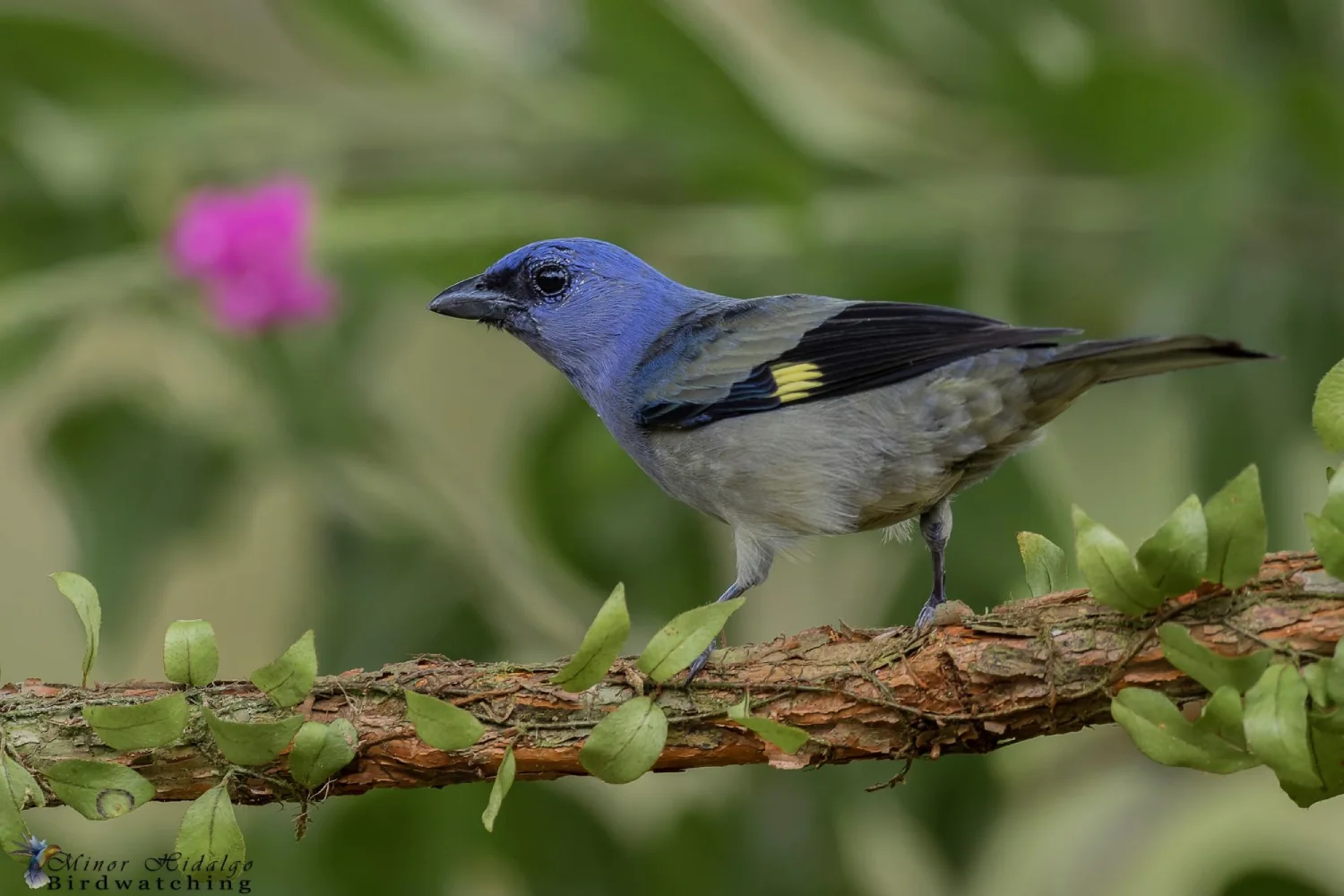
Thraupis abbas
Scientific Name
Thraupidae (Tanagers and Allies)
Family
Passeriformes
Order
T. a. abbas
Subspecies. From Mexico to Nicaragua
T. a. diaconus
Subspecies. Costa Rica and Panama
Range and Habitat of Yellow-winged Tanager
Geographic Range
The Yellow-winged Tanager ranges from eastern Mexico (Veracruz, Oaxaca) through Central America including Guatemala, Belize, El Salvador, Honduras, Nicaragua, Costa Rica, to western Panama.
Migratory Patterns
The Yellow-winged Tanager is non-migratory but shows local movements following fruit availability. Some seasonal movements occur between forest types and elevations.
Preferred Habitat
This tanager inhabits forest edges and clearings, secondary growth and disturbed areas, gardens and urban parks with trees, agricultural areas with scattered trees, gallery forests in drier regions, and semi-open habitats with appropriate fruiting trees. It adapts well to human-modified landscapes and is expanding into deforested areas.
Altitude Range
The species occurs from sea level to 1,500 m elevation in Costa Rica, occasionally up to 2,000 m. Most common below 1,000 m, with higher elevation records increasing as the species expands its range.
Costa Rica Habitat
In Costa Rica, the species occurs primarily on the Caribbean slope and in the northern Pacific region. It is found throughout the Caribbean lowlands and foothills, the Sarapiquí region, northern plains including Los Chiles and Upala, Guanacaste province including dry forest areas, and locally on the Pacific slope south to Carara. The species is expanding its range southward on the Pacific slope.
Conservation Status
Conservation Status
Least Concern
Population Status
Costa Rican populations are increasing and expanding in range. Density can reach 20-30 individuals per km² in optimal habitat.
While generally thriving, the species faces some challenges including collision with windows and vehicles in urban areas, pesticide exposure in agricultural areas, nest predation by introduced species in urban settings.
Conservation efforts
The Yellow-winged Tanager requires minimal conservation intervention due to its adaptability. It is protected under Costa Rican wildlife laws and benefits from urban green spaces and parks.
Primary Threats
While generally thriving, the species faces some challenges including collision with windows and vehicles in urban areas, pesticide exposure in agricultural areas, nest predation by introduced species in urban settings.
Yellow-winged Tanager Identification
How to Identify the Species
Rarity Level:
CommonBest Viewing Times:
Early Morning (Dawn - 8 AM), Afternoon (2 PM - 5 PM)
Size
17-18 cm in total length. Males weigh 35-42 g while females weigh 32-38 g. The wingspan ranges from 28-31 cm.
Plumage
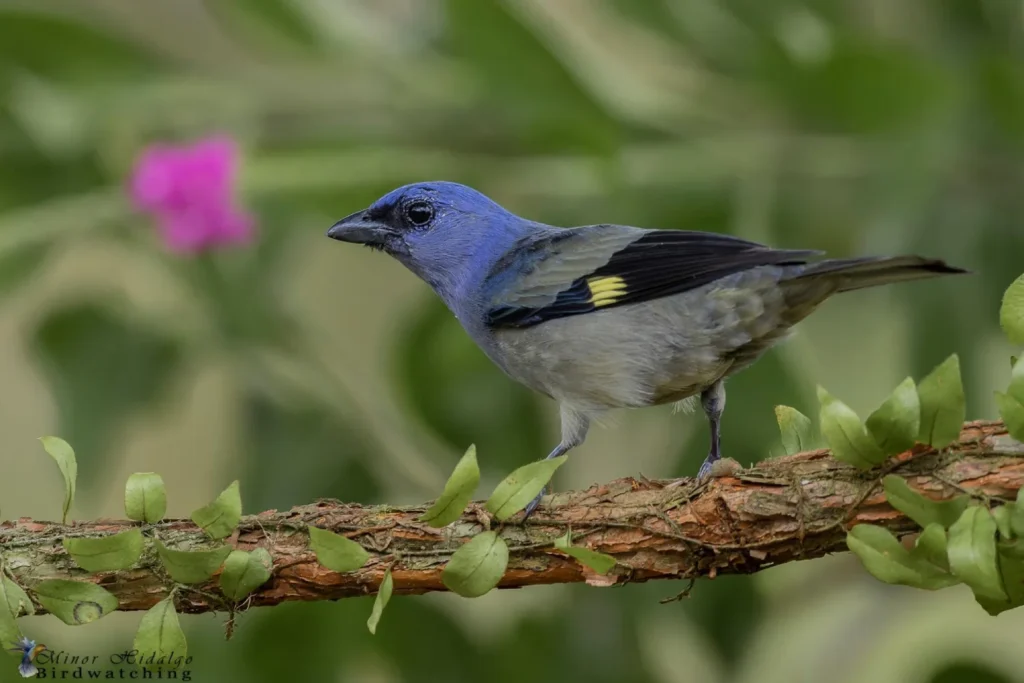
Adults display a distinctive pale lavender-blue head and underparts, with the color most intense on the head and gradually becoming grayer toward the belly. The back is darker blue to blue-gray. The diagnostic feature is the bright yellow patches on the wings, formed by yellow lesser and median wing coverts that create a prominent shoulder patch visible both at rest and in flight.
Distinctive Features
The combination of lavender-blue plumage with bright yellow wing patches is unique among Costa Rican tanagers. The bird shows a somewhat horizontal posture when perched and has a relatively large head for a tanager.
Sexual Dimorphism
Sexual dimorphism is minimal. Males may show slightly brighter lavender tones and more extensive yellow on the wings, but differences are not reliable for field identification. Both sexes share the same overall pattern.
Diet and Feeding Behavior
Primary Diet
- The Yellow-winged Tanager has an omnivorous diet consisting primarily of fruits including cultivated species like papayas, bananas, and citrus. It feeds on wild fruits such as Cecropia, Ficus, melastomes, and various berries.
Foraging Techniques
- This tanager typically forages in pairs or small groups, often joining mixed-species flocks. It plucks fruits while perched, reaching acrobatically when necessary.
Feeding Times
- Peak feeding occurs in early morning from 6:00-9:00 and late afternoon from 15:00-18:00. The species feeds intermittently throughout the day at fruiting trees. Activity increases during fruiting seasons of preferred plants.
Behavior Patterns
Yellow-winged Tanager
Social Structure
These tanagers are typically found in pairs or small family groups of 3-5 individuals. They readily join mixed-species foraging flocks with other tanagers, honeycreepers, and orioles.
Song and Vocalization
The song consists of a series of squeaky, buzzy notes “tsee-tsew-tsee-tsew” repeated at regular intervals. Call notes include a sharp “tsip” or “chip” given frequently while foraging. The species produces a distinctive nasal “nyeh” or “waah” call when agitated.
Courtship and Mating Ritual
Males perform simple courtship displays including wing-spreading to show yellow patches. Courtship feeding is common, with males offering fruits to females.
Territoriality
Pairs defend breeding territories of 1-2 hectares during nesting season. Territorial defense consists mainly of vocal displays and chases.
Birdwatching Tips
Best Locations for Spotting Yellow-winged Tanager
- La Selva Biological Station and surroundings
- Arenal area hotels and gardens
- Santa Rosa and Palo Verde National Parks
- urban parks in San José and Central Valley
- Hotel Bougainvillea and similar locations with gardens
- Caribbean lowland towns and settlements
- Sarapiquí region edges and clearings
- increasingly in Carara National Park area
Best Time of the Year
Observable year-round, with highest activity during breeding season (April-June). Early morning provides best viewing and vocal activity.
Common Behavior
Look for active birds in fruiting trees, especially figs and cecropias. The bright yellow wing patches are visible even at distance. Listen for squeaky, buzzy songs from prominent perches. Check forest edges and gardens with mixed fruit trees.
Recommended Gear
Basic equipment includes 8×42 binoculars adequate for most observations, a camera with 200-300mm lens sufficient for photography, and field guide to distinguish from similar species. This is generally an easy species to observe and identify.
Breeding and Nesting Behavior
Breeding Season
Breeding occurs from March to August in Costa Rica, with peak activity from April to June during the early wet season.
Nesting Sites
The nest is a neat cup measuring 10-12 cm across and 5-6 cm deep. It is constructed of rootlets, grass, moss, and plant fibers, lined with finer grasses and sometimes animal hair. Nests are typically placed 3-15 meters high in tree forks or at the base of palm fronds. Some nests are built in man-made structures like building eaves or bridge supports.
Clutch Size
2-3 eggs, typically 2
Incubation Period
13-14 days
Parental Care
The female performs most incubation while the male guards and occasionally feeds her. Both parents feed nestlings with insects and fruit pulp. Feeding rates increase as nestlings grow, with visits every 10-20 minutes. Young fledge at 15-17 days. Post-fledging care continues for 3-4 weeks as parents teach foraging skills.
Did You Know?
Interesting Behaviors
The species has learned to open sugar packets at outdoor restaurants. Some individuals regularly visit specific houses for offered fruits.
Cultural Significance
The name “viuda” (widow) refers to the subdued blue-gray coloration. The species appears in Costa Rican folk art and children’s books. Its expansion into urban areas has made it a familiar garden bird. Some consider it a competitor for fruit crops, while others appreciate its beauty.
Surprising Traits
Individual birds can remember feeding station schedules across seasons. The species shows problem-solving abilities when accessing protected fruits.
How do I identify this bird?
Look for a pale lavender-blue tanager with distinctive bright yellow wing patches. The combination is unique among Costa Rican birds. Slightly larger and paler than Blue-gray Tanager, with which it often associates. The yellow shoulders are visible both perched and in flight.
Where is the best place to see it in Costa Rica?
Common in gardens and forest edges throughout the Caribbean lowlands and northern regions. Any lodge with fruit feeders in these areas likely hosts this species. La Selva, Arenal area, and increasingly common in the Central Valley offer easy viewing.
Is it endangered?
No, the Yellow-winged Tanager is listed as Least Concern with stable to increasing populations. It has actually benefited from moderate deforestation and is expanding its range in Costa Rica. This is one of the more adaptable tanager species.