Ocellated Crake
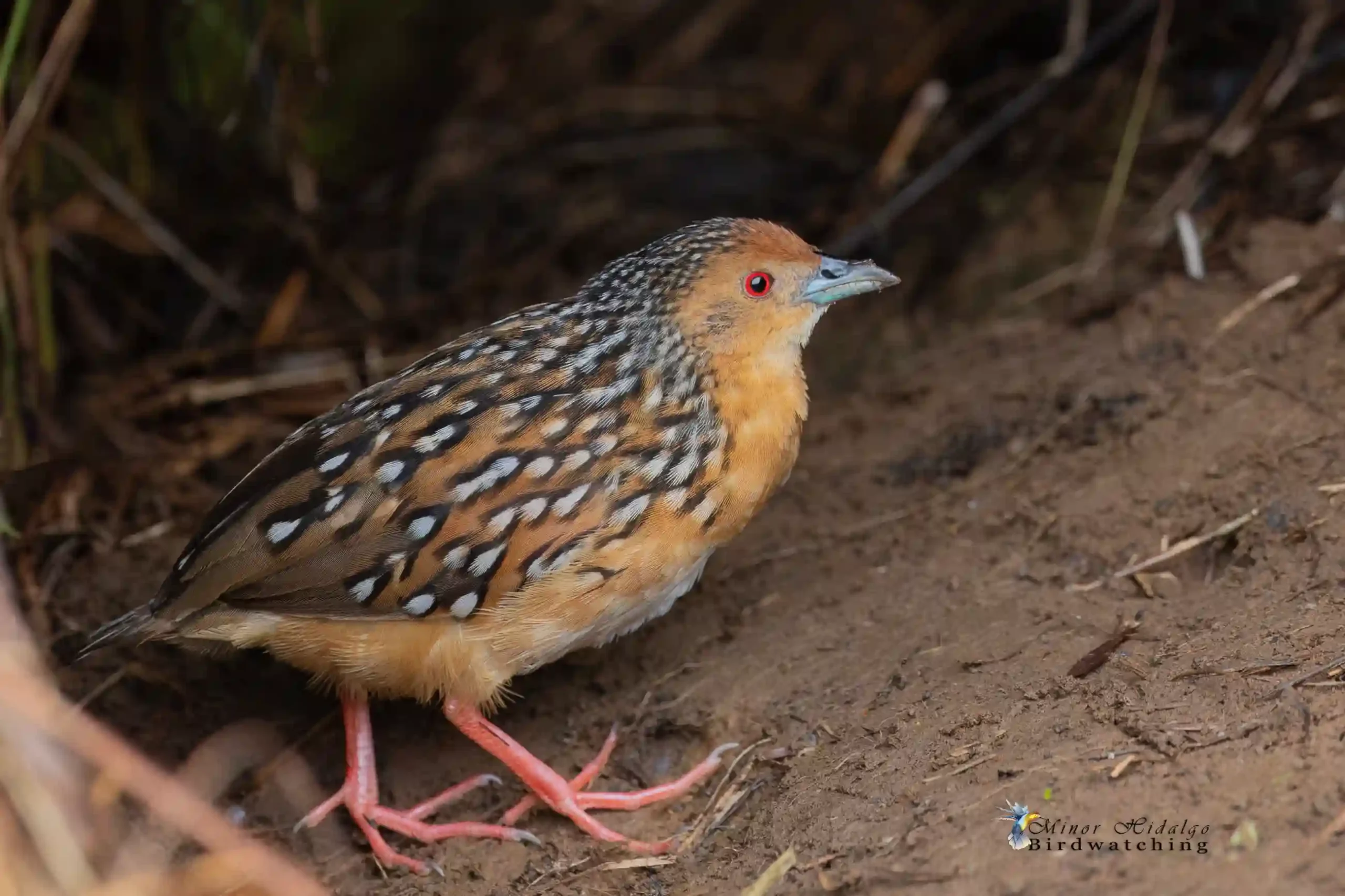
The Ocellated Crake is a small, secretive marsh bird found in freshwater wetlands from Honduras to Argentina, characterized by its striking ocellated or spotted plumage pattern with white spots on dark brown upperparts, buff underparts with barring, and elusive behavior as it forages in dense vegetation along water edges.
Rufirallus schomburgkii
Scientific Name
Rallidae (Rails, Coots, and Gallinules)
Family
Gruiformes
Order
M. s. schomburgkii
Subspecies. From southeastern Colombia through Venezuela, the Guianas, and northern Brazil
M. s. chapmani
Subspecies. From Costa Rica to western Colombia.
Range and Habitat of Ocellated Crake
Geographic Range
The Ocellated Crake has a disjunct distribution from Costa Rica through Panama, Colombia, Venezuela, Guyana, Suriname, French Guiana, Brazil, eastern Peru, eastern Bolivia, and southeastern Paraguay.
Migratory Patterns
The species is considered a non-migratory resident, though local movements may occur in response to water levels and burning of grasslands.
Preferred Habitat
The Ocellated Crake inhabits wet grasslands with scattered shrubs, marshy savannas, rice fields with tall grass edges, seasonally flooded pastures, and dense grassy margins of wetlands. It avoids heavily forested areas but uses gallery forest edges adjacent to grasslands.
Altitude Range
Costa Rica Habitat
This is strictly a lowland species. Globally and in Costa Rica, it occurs from sea level to 500 m elevation, with most records below 100 m.
Conservation Status
Conservation Status
Least Concern
Population Status
The global population size is unknown but suspected to be declining.
The species faces extensive wetland drainage for agriculture and development.
Conservation efforts
No specific conservation programs currently target this species in Costa Rica.
Primary Threats
The species faces extensive wetland drainage for agriculture and development.
Ocellated Crake Identification
How to Identify the Species
Rarity Level:
RareBest Viewing Times:
Early Morning (Dawn - 8 AM), Evening (Dusk)
Size
14-15 cm in total length. Males weigh 32-38 g while females weigh 30-35 g.
Plumage
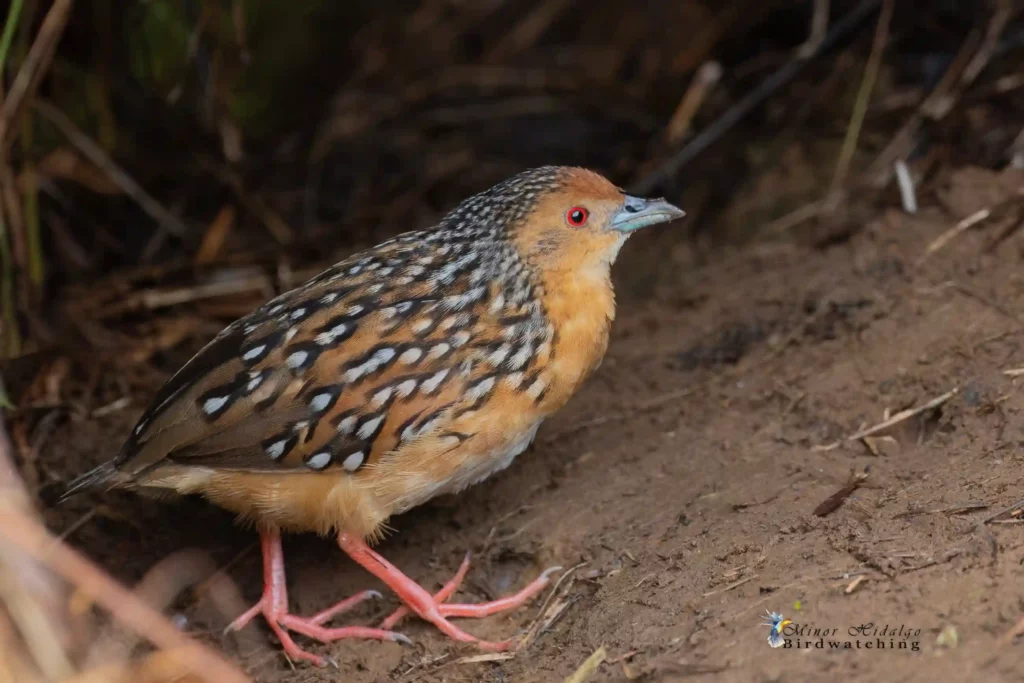
Adults display rich chestnut-brown upperparts densely marked with white spots surrounded by black borders, creating the distinctive “ocellated” (eye-like) pattern that gives the species its name.
Distinctive Features
The distinctive white-spotted pattern on the back is unique among Costa Rican rails. The bird maintains a horizontal, mouse-like posture when moving through vegetation.
Sexual Dimorphism
Sexual dimorphism is minimal. Males average slightly larger than females, but plumage differences are not reliable for field identification. Males may show slightly richer rufous coloration during breeding season.
Diet and Feeding Behavior
Primary Diet
- The Ocellated Crake feeds primarily on small invertebrates including insects such as beetles, grasshoppers, and crickets. It also consumes spiders, small snails, earthworms, and other soil invertebrates.
Foraging Techniques
- This crake forages by walking slowly through dense grass, picking prey from ground and vegetation. It uses its bill to probe soft soil and leaf litter and scratches with its feet to expose hidden prey.
Feeding Times
- The species is most active during dawn from 5:00-7:00 and dusk from 17:00-19:00. It also feeds during overcast days and may be active on moonlit nights.
Behavior Patterns
Ocellated Crake
Social Structure
This crake is primarily solitary or found in pairs during breeding season. Family groups may remain together for several weeks after breeding. The species is highly secretive and rarely seen even where common.
Song and Vocalization
The primary vocalization is a series of sharp, metallic “kek-kek-kek” notes, usually 5-10 in succession. It produces a soft purring trill during courtship and a high-pitched “peep” alarm call when threatened.
Courtship and Mating Ritual
Courtship involves males performing a display run with raised wings showing barred patterns. Food presentation to females occurs during pair bonding. Mutual preening strengthens pair bonds, and synchronized calling establishes territory boundaries.
Territoriality
Pairs defend small territories of 0.5-2 hectares during breeding season.
Birdwatching Tips
Best Locations for Spotting Ocellated Crake
Potential sites include the Térraba-Sierpe wetlands in southern Puntarenas, Caño Negro Wildlife Refuge (needs confirmation), wet pastures in the Río Frío region, rice field edges in Guanacaste during flooding, and marshy areas in the Coto Brus Valley.
Best Time of the Year
The best opportunity for observation is during the early wet season from May to July when birds are most vocal. Dawn and dusk offer peak activity periods.
Common Behavior
This is an extremely difficult species to observe. Listen for metallic calling at dawn and dusk, especially after rain. Watch grassland edges where birds may briefly appear.
Recommended Gear
Essential equipment includes high-quality binoculars (8×42 or 10×42) for scanning grass edges.
Breeding and Nesting Behavior
Breeding Season
Breeding occurs during the wet season throughout the range. In Costa Rica, breeding likely occurs from May to October, with peak activity June-August based on limited observations.
Nesting Sites
The nest is a shallow cup or platform made of woven grasses and sedges, lined with finer grasses and sometimes feathers. It is typically placed on or just above ground level, hidden in dense grass tussocks, and often has a canopy of bent grasses overhead.
Clutch Size
3-5 eggs, typically 4
Incubation Period
16-18 days
Parental Care
Both parents likely share incubation and chick-rearing duties. Chicks are precocial, leaving the nest within 24 hours of hatching. Parents lead chicks to feeding areas and provide protection.
Did You Know?
Interesting Behaviors
The Ocellated Crake can compress its body laterally to move through dense grass stems, earning rails the phrase “thin as a rail.” It freezes instantly when threatened, relying on cryptic plumage for camouflage.
Cultural Significance
In South American folklore, rail calls are sometimes interpreted as weather predictors. The ocellated pattern was considered protective against evil eyes in some indigenous cultures.
Surprising Traits
Despite having weak-looking flight, the species may be capable of long-distance dispersal. It can survive in very small habitat patches that seem unsuitable.
How do I identify this bird?
Look for a tiny, mouse-like rail with distinctive white spots bordered by black on the chestnut-brown back (ocellated pattern). The plain rufous head and neck, whitish throat, and barred flanks are diagnostic. The extremely secretive nature and grassland habitat help narrow identification.
Where is the best place to see it in Costa Rica?
This is one of Costa Rica’s most difficult birds to observe. The Térraba-Sierpe wetlands and Río Frío region offer the best chances, though sightings are extremely rare. Focus on wet grasslands with appropriate height and density, especially at dawn during the early wet season.
Is it endangered?
While listed as Least Concern globally, the Costa Rican population is poorly known and possibly declining. The species’ secretive nature makes assessment difficult, but habitat loss is a serious concern.