Barred Hawk, Black-chested Hawk
The Barred Hawk is a medium-sized raptor found in humid lowland and foothill forests of Central and South America, distinguished by its striking black-and-white barred plumage, relatively short wings, and specialized hunting behavior in dense forest canopy.
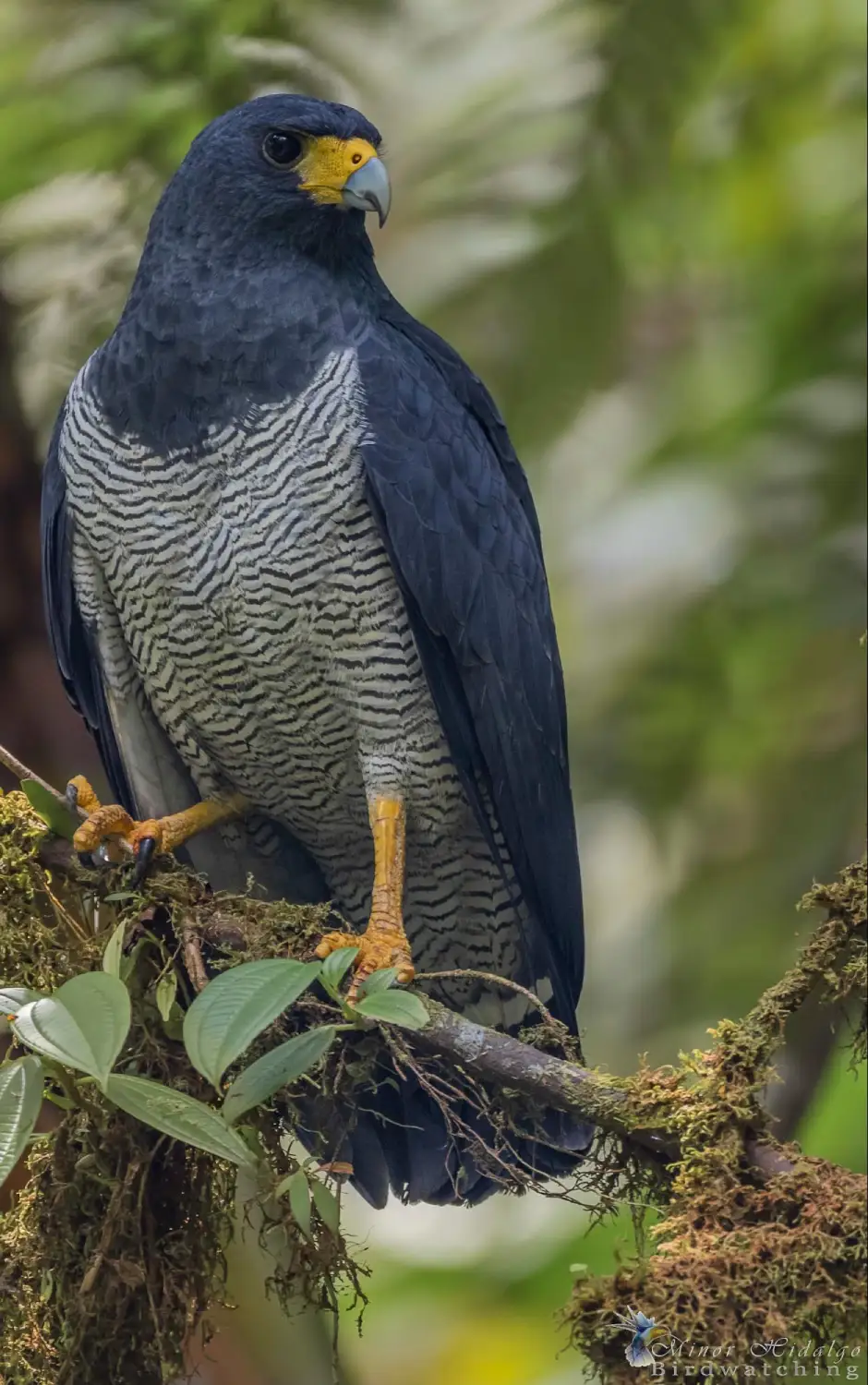
Morphnarchus princeps
Scientific Name
Accipitridae (Hawks, Eagles, and Kites)
Family
Accipitriformes
Order
Range and Habitat of Barred Hawk, Black-chested Hawk
Geographic Range
Southern Mexico (Oaxaca, Chiapas), Guatemala, El Salvador, Honduras, Nicaragua, Costa Rica, Panama, Colombia, Ecuador, Peru, Bolivia
Migratory Patterns
Non-migratory resident. May show local movements following prey availability.
Preferred Habitat
Primary montane wet forests, cloud forests, mature secondary forests, forest edges adjacent to clearings
Altitude Range
Most common 1,200-2,500 m, occasionally 800-3,000 m
Costa Rica Habitat
Both Caribbean and Pacific slopes from Cordillera de Guanacaste south through Cordillera Central and Cordillera de Talamanca
Conservation Status
Conservation Status
Least Concern
Population Status
Uncommon to fairly common in suitable habitat
Deforestation and forest fragmentation
Conservation efforts
Protected in numerous Costa Rican national parks and reserves. Listed under CITES Appendix II regulating international trade.
Primary Threats
Deforestation and forest fragmentation
Barred Hawk, Black-chested Hawk Identification
How to Identify the Species
Rarity Level:
CommonBest Viewing Times:
Early Morning (Dawn - 8 AM), Afternoon (2 PM - 5 PM)
Size
Length: 51-61 cm; Weight: Males 900-1,050 g; Females 1,050-1,300 g
Plumage
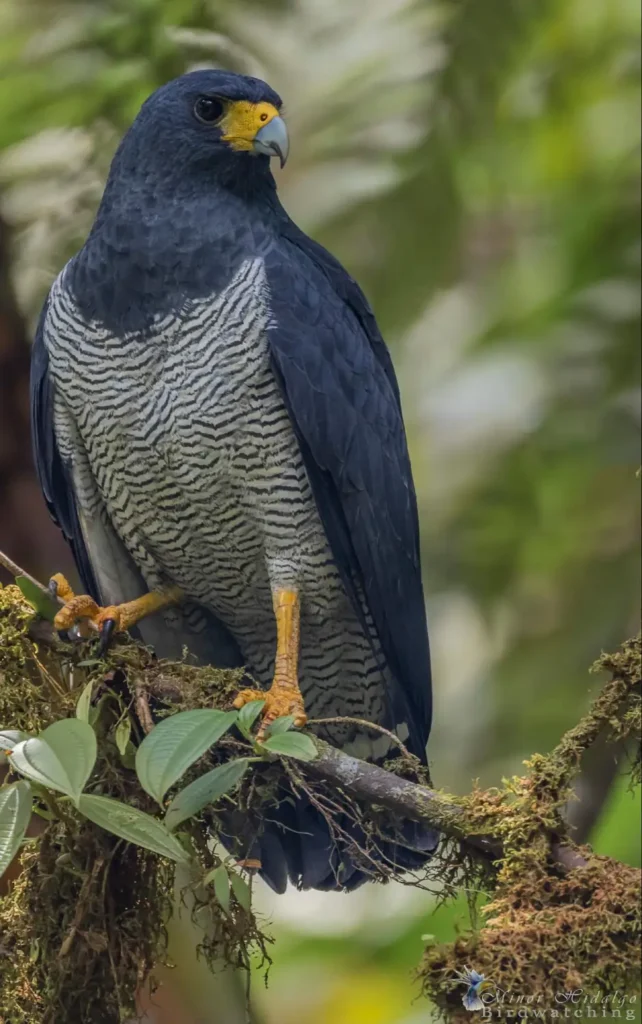
Head, neck, and upper breast slate-black to sooty black. Lower breast and belly white with bold black barring. Back and upperwing coverts slate-gray. Tail black with 3-4 gray-white bars and white tip. Underwing coverts white with black barring. Flight feathers barred black and gray.
Distinctive Features
Heavy, hooked black bill (28-32 mm) with gray cere, powerful yellow legs and feet with sharp black talons, broad, rounded wings typical of forest hawks
Sexual Dimorphism
Females approximately 15-20% larger and heavier than males. No plumage differences between sexes.
Diet and Feeding Behavior
Primary Diet
- Small to medium mammals: squirrels, rats, mice, bats Birds: thrushes, tanagers, doves, quail-doves, wood-quail Reptiles: snakes (including venomous species), lizards
Foraging Techniques
- Still-hunting from concealed perch within forest canopy
Feeding Times
- Most active early morning (6:00-9:00) and late afternoon (15:00-18:00)
Behavior Patterns
Barred Hawk, Black-chested Hawk
Social Structure
Generally solitary or in pairs
Song and Vocalization
Primary call: Loud, piercing whistle “wheeeeer” or “kee-eeeeee” lasting 2-3 seconds
Courtship and Mating Ritual
Sky-dancing displays with undulating flights, male presents prey to female
Pairs perform synchronized calling duets
Territoriality
Maintains territories of 100-200 hectares; actively defends against other raptors
Birdwatching Tips
Best Locations for Spotting Barred Hawk, Black-chested Hawk
- Monteverde Cloud Forest Reserve (Continental Divide trail)
- San Gerardo de Dota valley
- Cerro de la Muerte area
- Los Quetzales National Park
- Tapantí National Park (Oropéndola trail)
- Savegre Mountain Lodge area
- Braulio Carrillo National Park (Barva sector)
- Villa Mills area
Best Time of the Year
Year-round, but most visible March-May during breeding displays
Common Behavior
Listen for loud whistled calls in early morning, watch for soaring birds mid-morning on sunny days
Recommended Gear
- 10×42 binoculars minimum for forest birding
- Spotting scope useful for distant perched birds
- Camera with 500mm+ lens for photography
Breeding and Nesting Behavior
Breeding Season
February-June, peak March-April (dry to early wet season)
Nesting Sites
Large platform of sticks and branches lined with green leaves, moss, and epiphytes, placed in main fork of emergent tree, typically 15-30 m high
Clutch Size
1-2 eggs (usually 1)
Incubation Period
35-37 days
Parental Care
Female primarily incubates while male provides food. Both parents feed young. Fledging occurs at 45-50 days. Post-fledging dependency period 3-4 months.
Did You Know?
Cultural Significance
In indigenous Cabécar mythology of Talamanca, the Barred Hawk is considered a messenger between the earthly and spiritual realms
Surprising Traits
Can hunt successfully in dense fog conditions using primarily auditory cues
How do I identify this bird?
Look for a medium-large hawk with distinctive black hood and upper breast contrasting sharply with white lower underparts heavily barred with black. In flight, note broad rounded wings and banded tail. The loud whistled call is distinctive.
Where is the best place to see it in Costa Rica?
Monteverde Cloud Forest Reserve offers reliable sightings, especially along the Continental Divide trail. San Gerardo de Dota valley and the road to Cerro de la Muerte (Route 2) between KM 70-95 are also excellent locations.
Is it endangered?
Listed as Least Concern globally, but populations are declining due to deforestation. It requires large tracts of montane forest and is vulnerable to habitat fragmentation. Protected under CITES Appendix II.