Northern Jacana
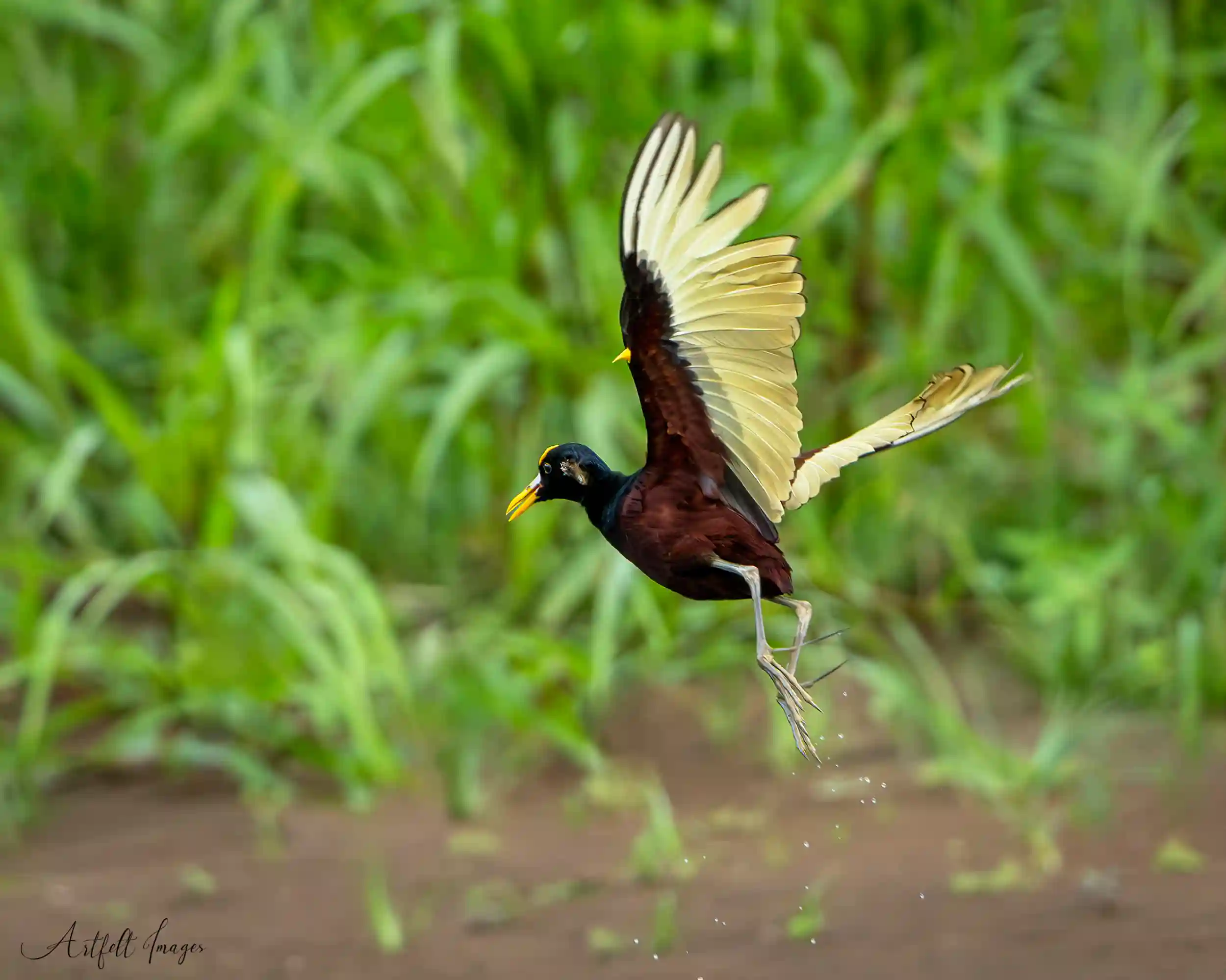
Jacana spinosa
Scientific Name
Jacanidae
Family
Charadriiformes
Order
Range and Habitat of Northern Jacana
Geographic Range
Resident from coastal Mexico through Central America to western Panama, including Costa Rica. Also occurs on Cuba, Jamaica, and Hispaniola in the Caribbean.
Migratory Patterns
Essentially non‑migratory (resident) across its range; may wander locally with water level changes and can occasionally stray north after wet seasons.
Preferred Habitat
Freshwater wetlands with abundant floating or emergent vegetation: ponds, marshes, lake margins, slow rivers, flooded fields, and grassy edges.
Strong association with water lilies, water hyacinths, and other floating plants.
Altitude Range
In Costa Rica, primarily below about 1,000 m; most common in coastal and lowland interior wetlands.
Costa Rica Habitat
Widespread in lowland wetlands throughout the country, especially along ponds, marshes, slow rivers, flooded pastures, and riverbanks.
Particularly abundant in Guanacaste’s Tempisque basin and the Río Frío / northern Caribbean lowlands (e.g., around Caño Negro, Tortuguero).
Conservation Status
Conservation Status
Least Concern
Population Status
Global population estimated at roughly 500,000–5,000,000 mature individuals.
Loss and degradation of wetlands through drainage, agriculture, and development.
Conservation efforts
Benefit from general wetland conservation, Ramsar sites, and national park protections; no species‑specific large‑scale program is currently highlighted, reflecting its non‑threatened status.
Primary Threats
Loss and degradation of wetlands through drainage, agriculture, and development.
Northern Jacana Identification
How to Identify the Species
Rarity Level:
CommonBest Viewing Times:
Early Morning (Dawn - 8 AM), Late Morning (8 AM - 11 AM), Midday (11 AM - 2 PM), Afternoon (2 PM - 5 PM)
Size
Length: 17–24 cm (6.7–9.4 in); Weight: 87–145 g; Wingspan: About 51 cm (20 in)
Plumage
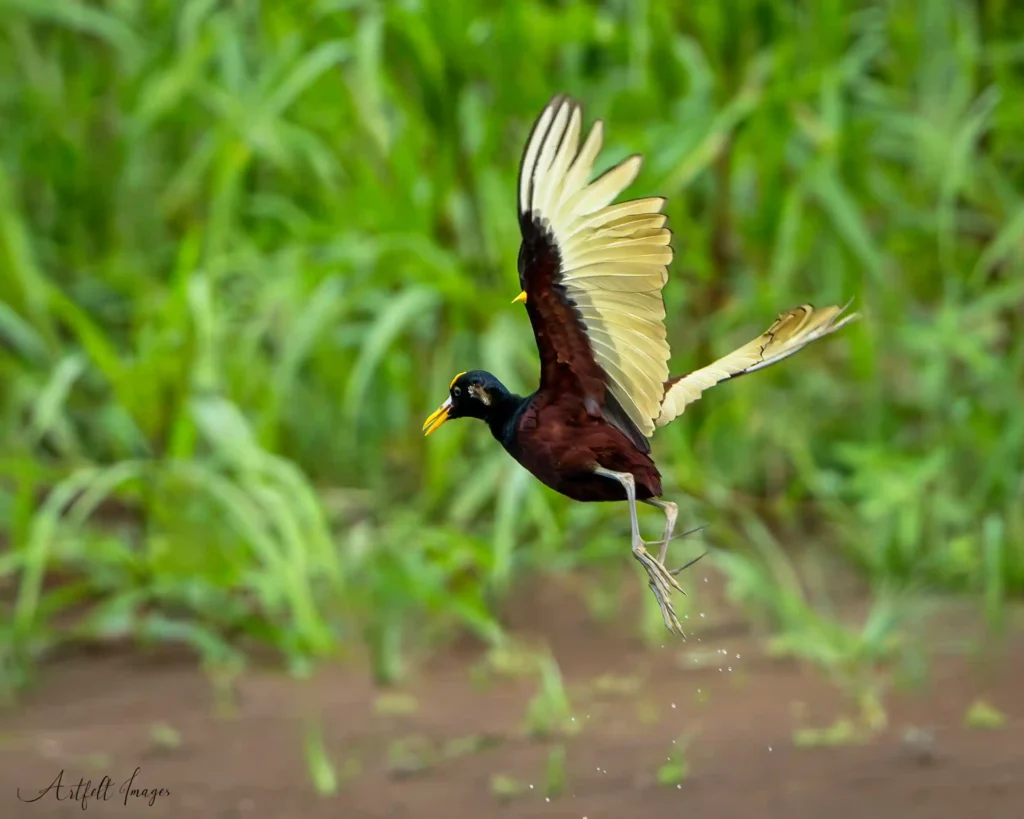
Mostly dark, with black head, neck, breast and underparts; rich chestnut to rufous back and wings; bright yellow bill and frontal shield (“wattle”); yellowish‑green primary and secondary flight feathers visible in flight.
Distinctive Features
Extremely long toes and claws that allow walking on floating vegetation (“lily‑trotter”).
Bright yellow frontal shield and bill, often with a white base to the bill.
Sexual Dimorphism
Females are larger and heavier than males; plumage is otherwise very similar, so size and behavior (dominant female) are the main field clues.
Diet and Feeding Behavior
Primary Diet
- Mostly aquatic insects and other invertebrates. Also takes ovules of water lilies, small fish, snails, worms, small crabs, mollusks, and some seeds.
Foraging Techniques
- Walks on floating vegetation using long toes, picking prey from plant surfaces, water surface, or just below.
Feeding Times
- Primarily diurnal, actively foraging throughout daylight hours in wetlands.
Behavior Patterns
Northern Jacana
Social Structure
Highly social for a shorebird; occurs in small colonies centered on a dominant female and 1–4 males. Males hold smaller territories nested within the female’s larger territory.
Song and Vocalization
Loud, sharp calls and repeated notes used in territorial defense and contact; often vocal around wetlands.
Courtship and Mating Ritual
Polyandrous system: one female mates with multiple males during a breeding season, laying a separate clutch for each male. Courtship includes calling, chasing, and pair interactions on floating vegetation; females move among males within their territory.
Territoriality
Both sexes defend territories with display flights, loud calls, and physical aggression, including use of a sharp bony spur on the wing.
Birdwatching Tips
Best Locations for Spotting Northern Jacana
- Guanacaste lowlands and Tempisque basin wetlands.
- Northern Caribbean lowlands: Río Frío area, Caño Negro, and around Tortuguero National Park.
- Also common around ponds, marshes, and flooded pastures throughout other lowland regions.
Best Time of the Year
Activity and breeding behavior are especially conspicuous during the rainy season when water levels are suitable and birds are vocal and territorial.
Common Behavior
Look for birds walking on lily pads or floating vegetation with oversized toes, often in small groups. Loud calls and conspicuous flight with yellowish‑green wings can reveal them; watch edges of ponds and wet pastures.
Recommended Gear
Binoculars: 8×32 or 8×42 are ideal for wetland scanning.
Camera: Weather‑resistant body with a 300–500 mm telephoto lens helps capture birds on distant pond surfaces.
Breeding and Nesting Behavior
Breeding Season
Generally during wet seasons when water levels and food availability are high; timing varies geographically.
Nesting Sites
Nest built by the male: flimsy open cup of plant material placed on top of floating or standing marsh vegetation in shallow water.
Clutch Size
Usually 4 eggs, sometimes 3–5.
Incubation Period
About 22–24 days, almost entirely by the male
Parental Care
Males: build nests, incubate eggs, lead chicks to feeding areas, brood young in rain or cool weather. Females: may occasionally shade eggs or brood chicks but invest much less time than males; both sexes defend territories and chicks using calls and wing spurs.
Did You Know?
Interesting Behaviors
Females are larger, dominate multiple males, and practice classic polyandry; males do most of the nesting and chick‑rearing work. They carry sharp wing spurs used in aggressive displays and defense.
Surprising Traits
They can appear to “walk on water” thanks to their huge toes spreading weight over floating plants.
Cultural Significance
In Costa Rica they are a familiar wetland bird, often highlighted in nature tours and local media as an example of reversed sex roles and “lily‑trotter” lifestyle.
How do I identify this bird?
Look for a medium‑sized dark shorebird with black head and neck, chestnut back, very long toes, bright yellow bill and frontal shield, and yellowish‑green wings in flight, often walking on lily pads.
Where is the best place to see it in Costa Rica?
Your best chances are lowland wetlands such as Guanacaste’s Tempisque basin, Río Frío / Caño Negro area, and wetlands around Tortuguero; also many ponds and flooded pastures throughout the lowlands.
Is it endangered?
No. It is currently listed as Least Concern by the IUCN, with a large range and a sizable global population, though continued wetland conservation is important.