Courtship displays and bird behavior in Costa Rica
Birding in Costa Rica isn’t just a numbers game—it’s an invitation to witness some of the most fascinating bird behavior in the Neotropics. From the dance rituals of the Long-tailed Manakin to the lifelong bonds of Scarlet Macaws, Costa Rica’s forests stage performances of courtship, cooperation, and sound that reveal the hidden lives of its…
How (and why) Costa Rica’s birds put on some of the most memorable shows in the Neotropics
Birding in Costa Rica is often described in terms of numbers, how many species can be seen in a single day, or how quickly a long checklist can grow. But beyond the statistics lies another layer of discovery that many visitors remember even more vividly: behavior. Courtship displays, pair bonding, territorial rituals, and breeding strategies offer glimpses into how birds live their lives, not just how they look.
Costa Rica’s remarkable diversity of habitats, ranging from lowland rainforest and mangroves to cloud forest and dry Pacific woodland, supports an equally diverse range of breeding behaviors. Some species rely on elaborate visual displays, others on sound, precision timing, or lifelong partnerships. Observing these behaviors adds depth to birding experiences and often transforms familiar species into something entirely new.
Dancing for Attention: The Long-tailed Manakin
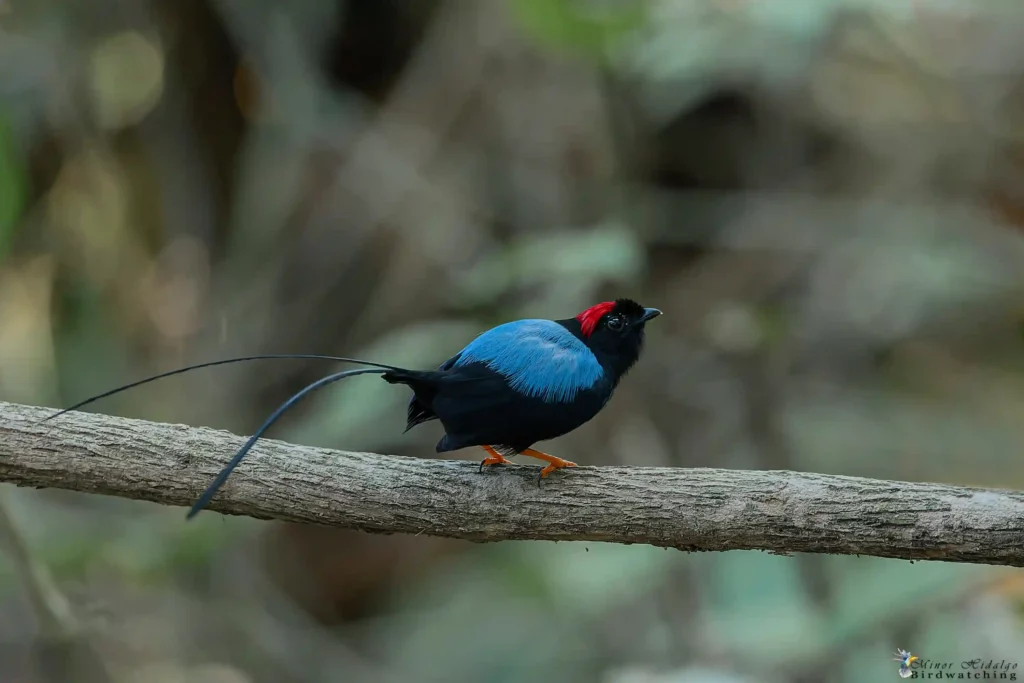
Few courtship displays in Costa Rica are as memorable as that of the Long-tailed Manakin. Found in the transitional forest of the Central Pacific, north into Guanacaste, this small, energetic bird is known for its extraordinary lek behavior.
Rather than pairing off to raise young, male Long-tailed Manakins gather at traditional display sites, where they perform rapid-fire dances that include coordinated hops, and acrobatic movements along horizontal branches. These displays are often practiced and refined over time, with males perfecting their routines in anticipation of female visits. Females observe quietly, evaluating speed, precision, and stamina before selecting a mate. Once mating occurs, the female alone builds the nest and raises the young, while the males continue dancing, seemingly unfazed.
Witnessing a manakin lek is less about a single moment and more about watching choreography unfold, behavior shaped by generations of selection and fine-tuned performance.
Life-long Bonds: Scarlet Macaws
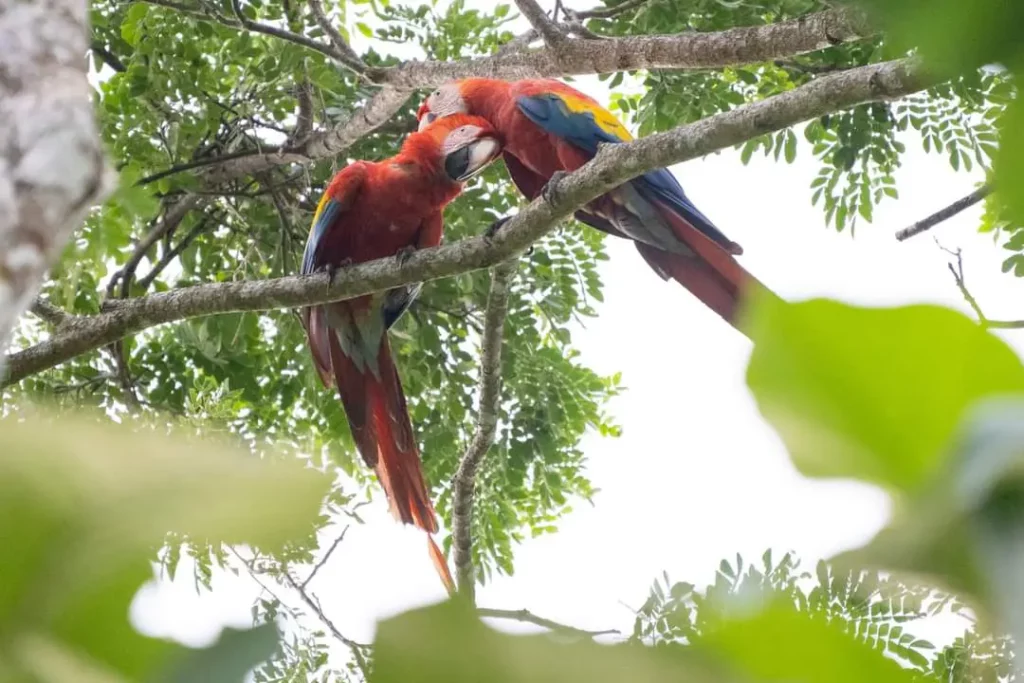
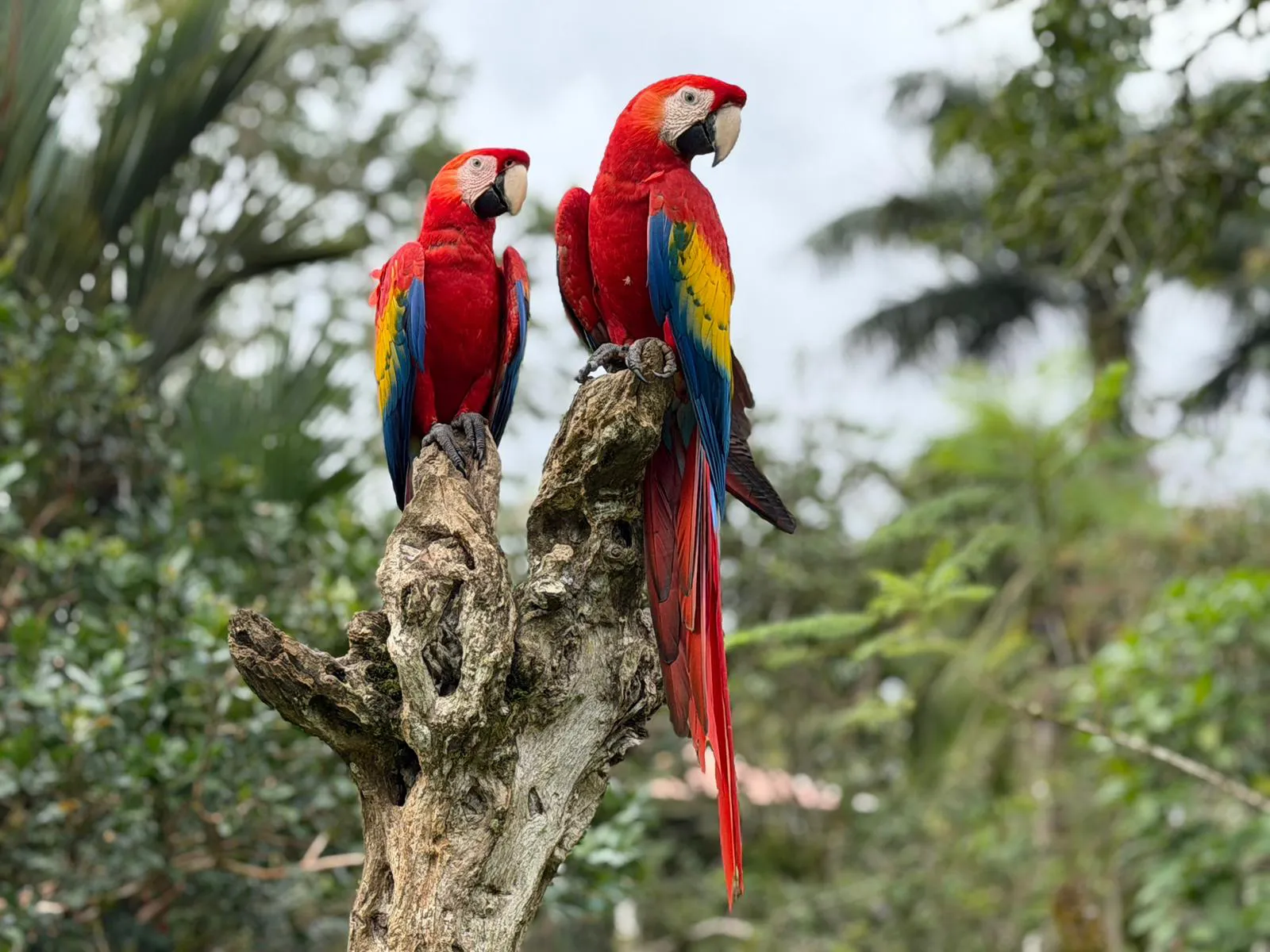
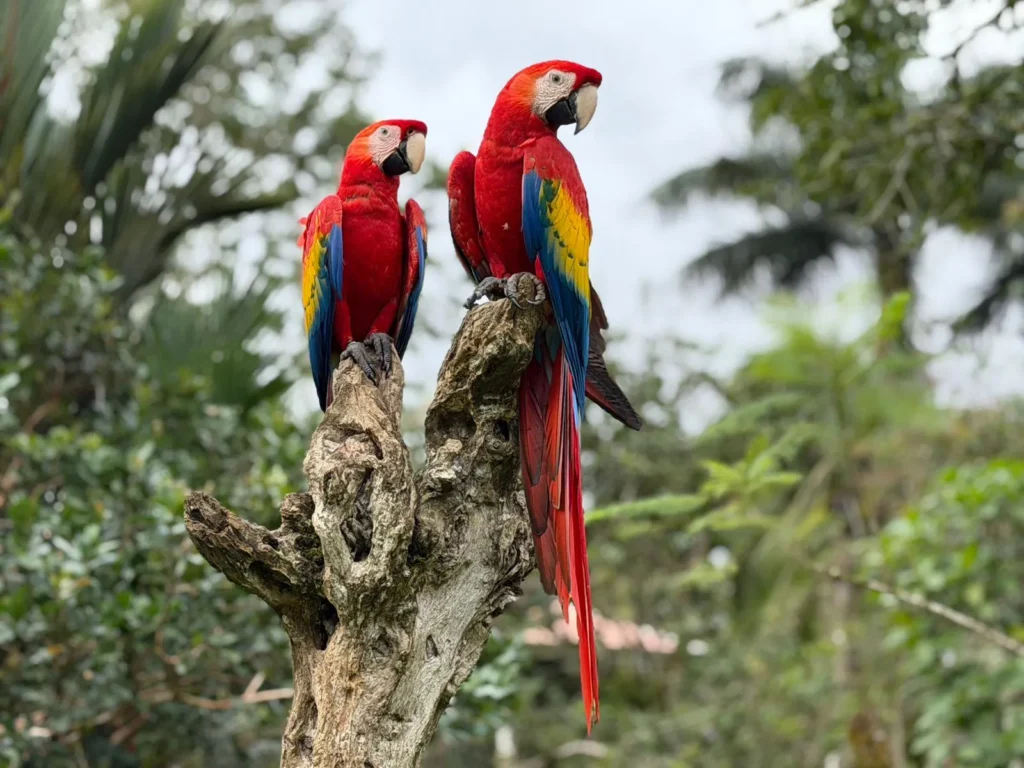
In contrast to lekking species, Scarlet Macaws follow a very different path. These iconic birds, most commonly seen in Costa Rica’s Central Pacific and Osa Peninsula regions, are known to form long-term pair bonds, often lasting for life.
Scarlet Macaw pairs are frequently observed flying together, preening one another, vocalizing in constant contact, and sharing food. During the breeding season, pairs work cooperatively to select and defend nest cavities, usually in large trees. Their synchronized movements and mutual awareness are unmistakable, and over time, many birders come to recognize individual pairs returning year after year.
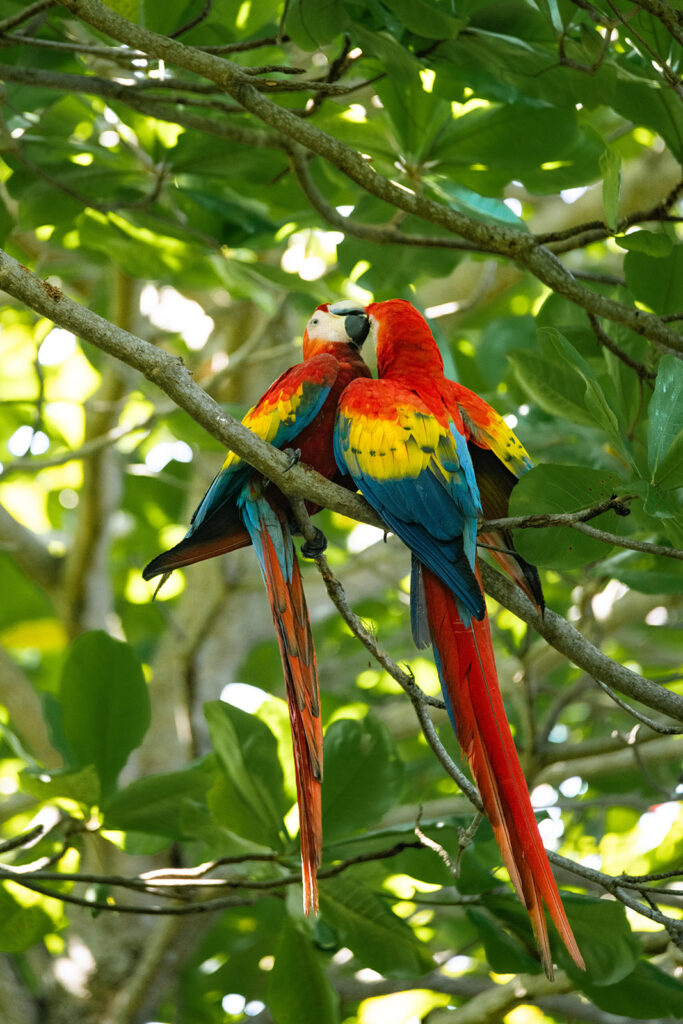
Seeing Scarlet Macaws in flight is always impressive, but watching the subtle interactions between bonded pairs, quiet moments of coordination amid the noise and color, offers a deeper understanding of their social lives.
Nesting Behavior of Costa Rica’s Trogons and Oropendolas
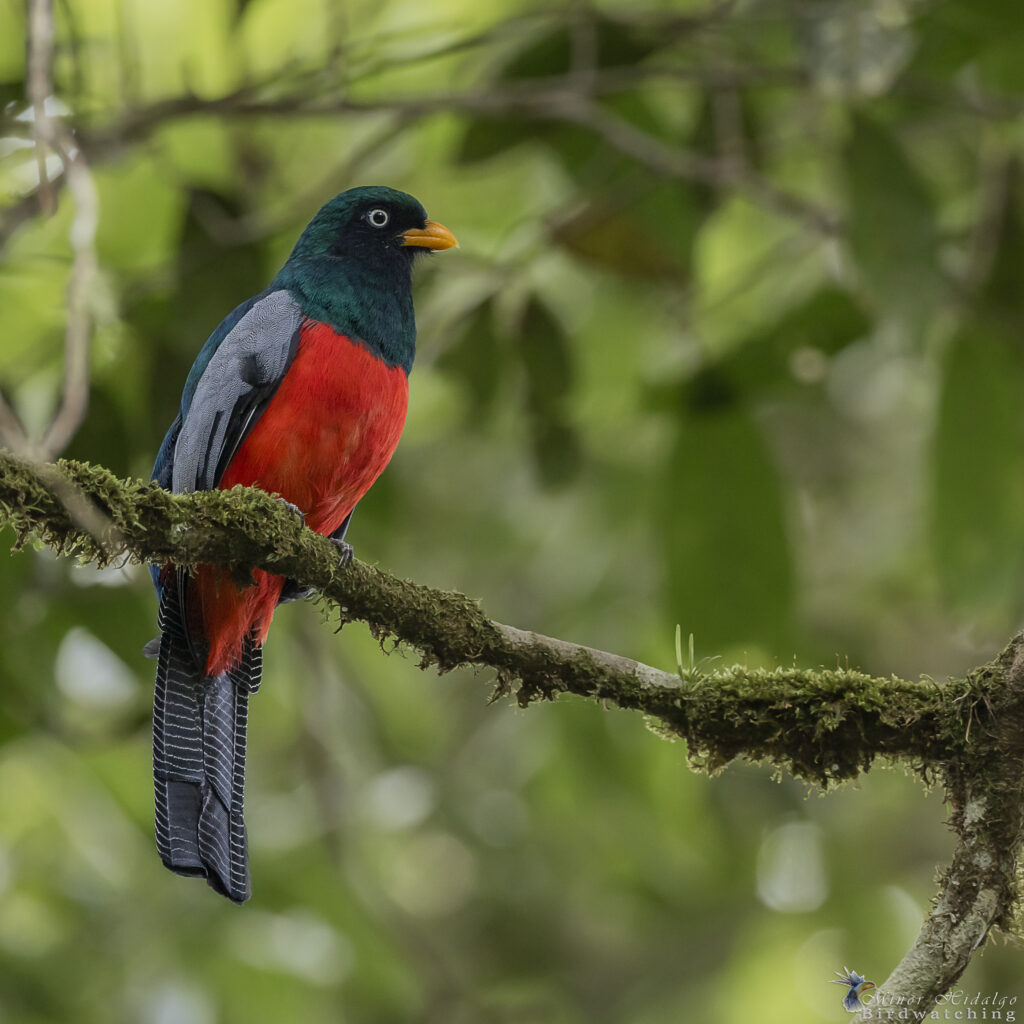
Trogons are often admired for their rich colors and calm demeanor, but their breeding behavior reveals another side of their lives. In Costa Rica, species such as the Baird’s Trogon rely on natural cavities or old woodpecker holes for nesting. Pairs take turns guarding nest sites, often remaining motionless for long periods, blending into the forest as they watch and wait. Their courtship is understated compared to the spectacle of manakins or macaws, but the patience involved, careful site selection, quiet cooperation, and vigilance, speaks to a different survival strategy.
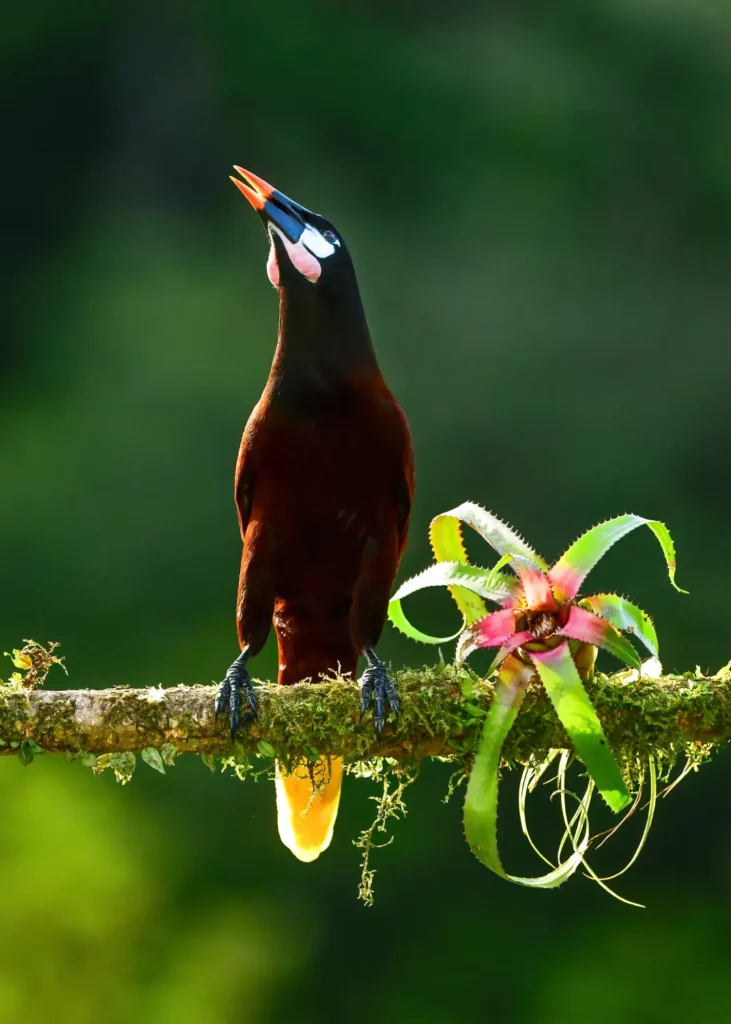
Species like the Montezuma Oropendola form noisy nesting colonies where dozens of long, woven nests hang from the tips of tall trees. Males perform exaggerated bowing displays, swinging forward and vocalizing with mechanical-sounding calls to assert dominance and attract mates. The colonies are active, chaotic, and constantly in motion, with females inspecting nests while males compete for position. Watching an oropendola colony at full activity is less like seeing a single bird and more like witnessing a living structure ; sound, movement, and social dynamics all unfolding at once.
Sound as Strategy: Bellbirds and Manakins
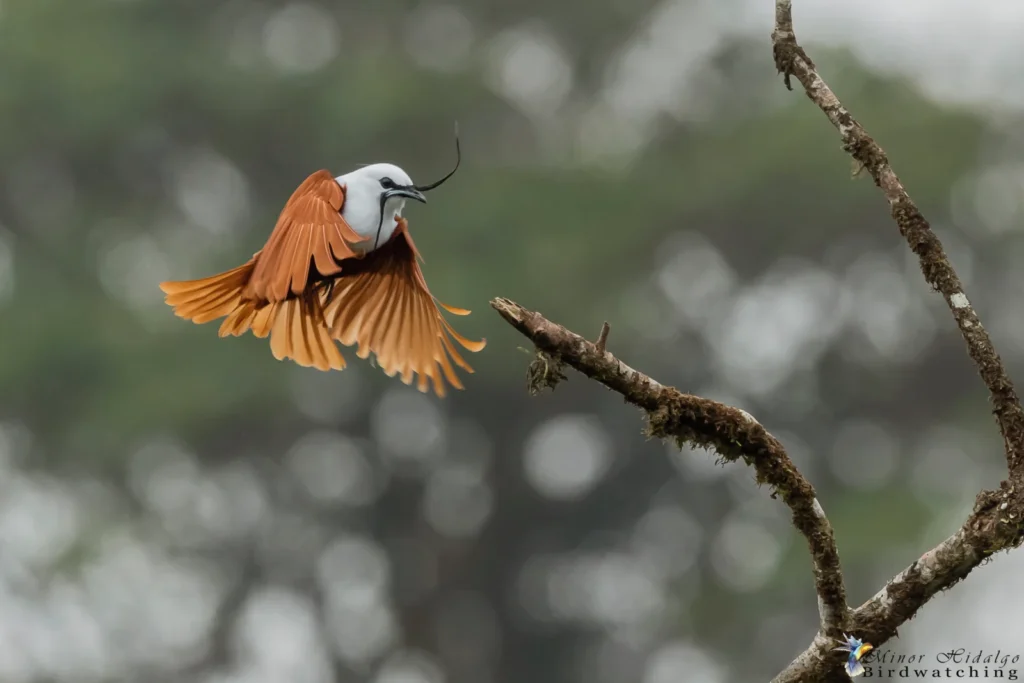
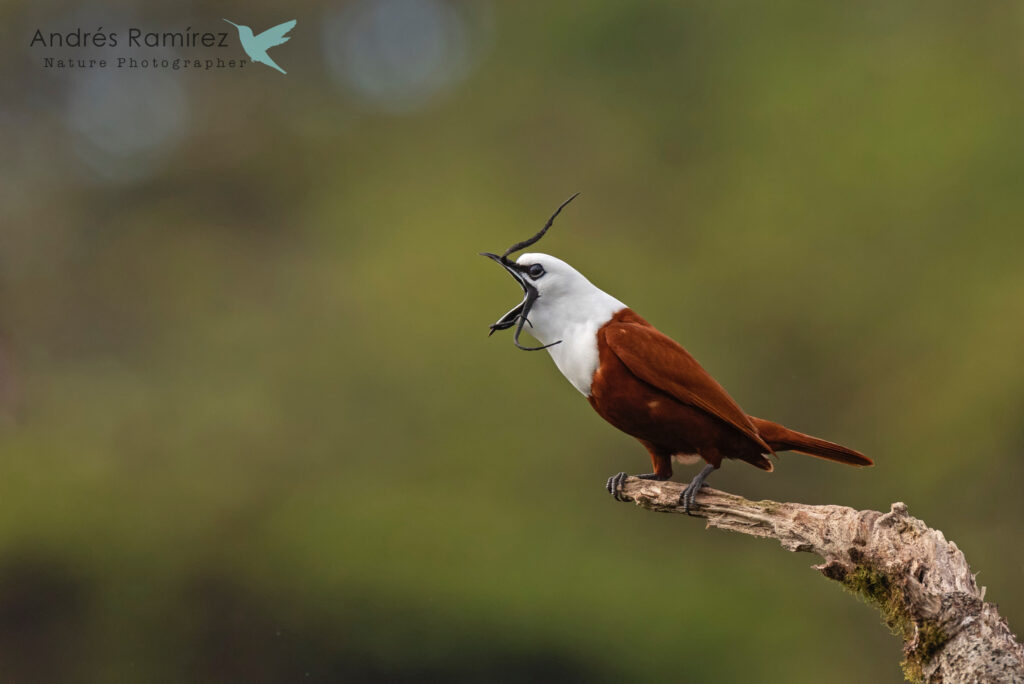
While some species rely on movement, others depend on sound. The Three-wattled Bellbird, an infamous species most commonly seen in Monteverde, is famous for its metallic, far-carrying calls. Males perch high in the canopy and broadcast their presence across the forest, advertising strength and territory to attract potential mates. The Bellbird is known to call up to 2000 times per day. Visit between March and September for the most likely chance to catch a good look at this species.
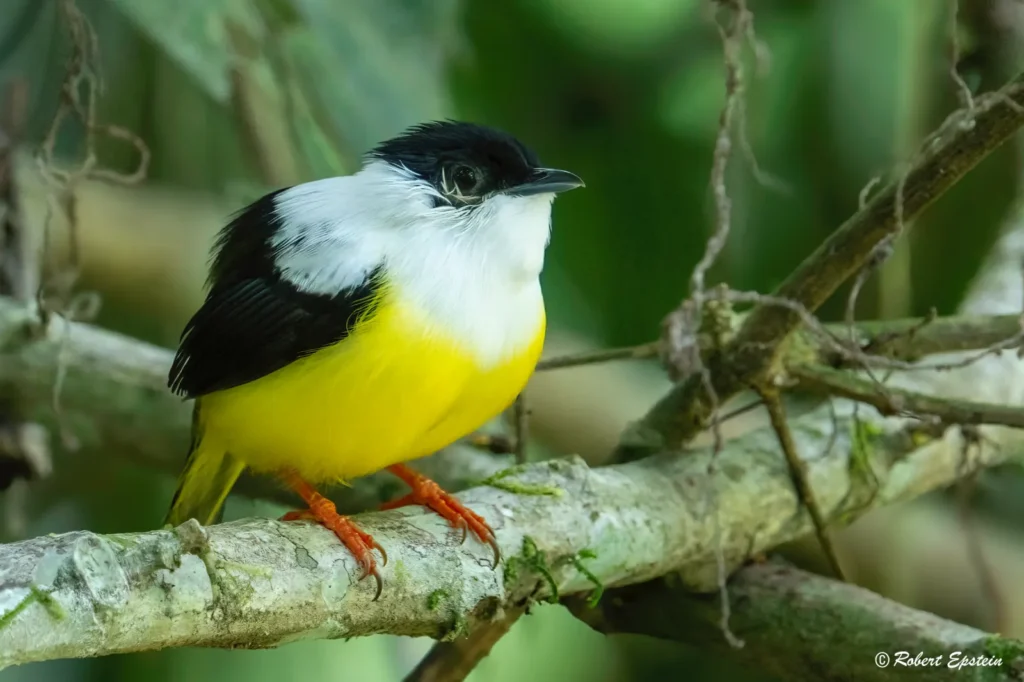
Manakin species such as the White-Collared Manakin use sharp snaps, buzzes, and wing-generated sounds to accompany their movements. These auditory cues are just as important as visual ones, especially in dense forest where visibility is limited. Visitors to the Caribbean lowland rainforest are sure to hear the constant snap-snap-snap emanating from the forest understory.
How Watching Bird Behavior Deepens Birding in Costa Rica
Observing bird behavior, whether it’s a manakin dancing, macaws reinforcing a bond, or a trogon guarding a nest, adds context to species sightings. These moments offer insight into how birds interact with their environment, with each other, and with the rhythms of the forest.
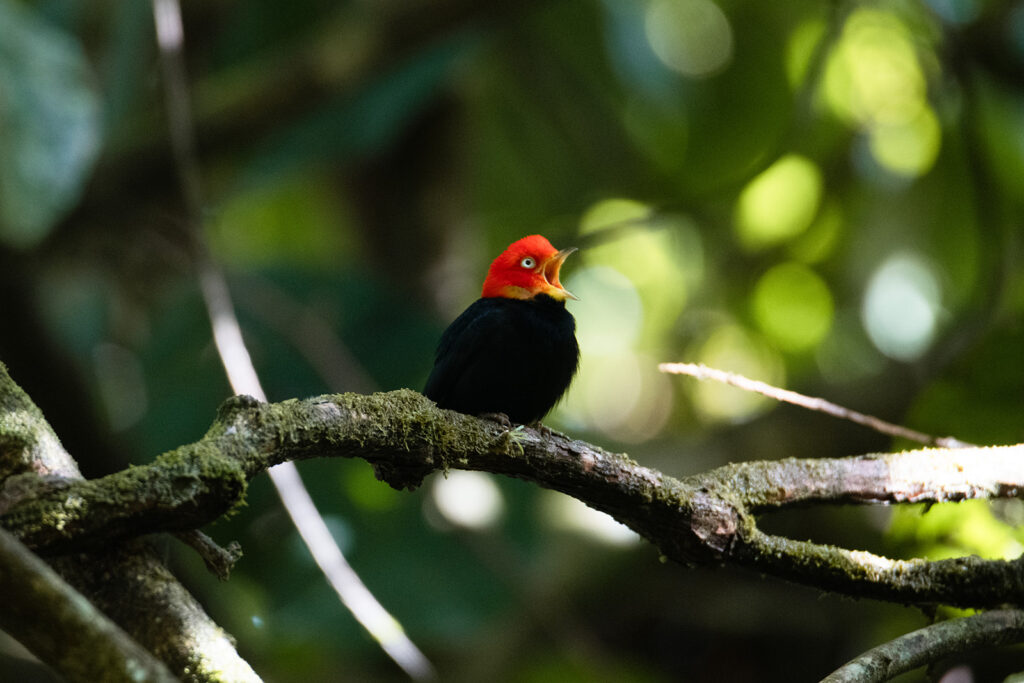
In Costa Rica, these behaviors are not rare anomalies. They are part of everyday life in healthy ecosystems, unfolding quietly for those willing to pause and watch. Many visitors leave remembering not just what they saw, but what they witnessed: interactions, rituals, and fleeting moments that reveal birds as active participants in complex lives.
Courtship displays and bird behavior in Costa Rica
Get a Free Quote
See Most Recent Posts
Why slowing down makes you a better birder in Costa
Rushing through Costa Rica's rainforest means missing the birds. Learn why the slowest walkers see the most species, and how…

Costa Rica Birds and Beyond Trip Report | January 19–30,
Scarlet Macaws, Great Potoo, hummingbirds, whales, and a surprise owl at dinner—see what made our 2026 Birds and Beyond tour…

Courtship displays and bird behavior in Costa Rica
Birding in Costa Rica isn’t just a numbers game—it’s an invitation to witness some of the most fascinating bird behavior…