
Tody Motmot
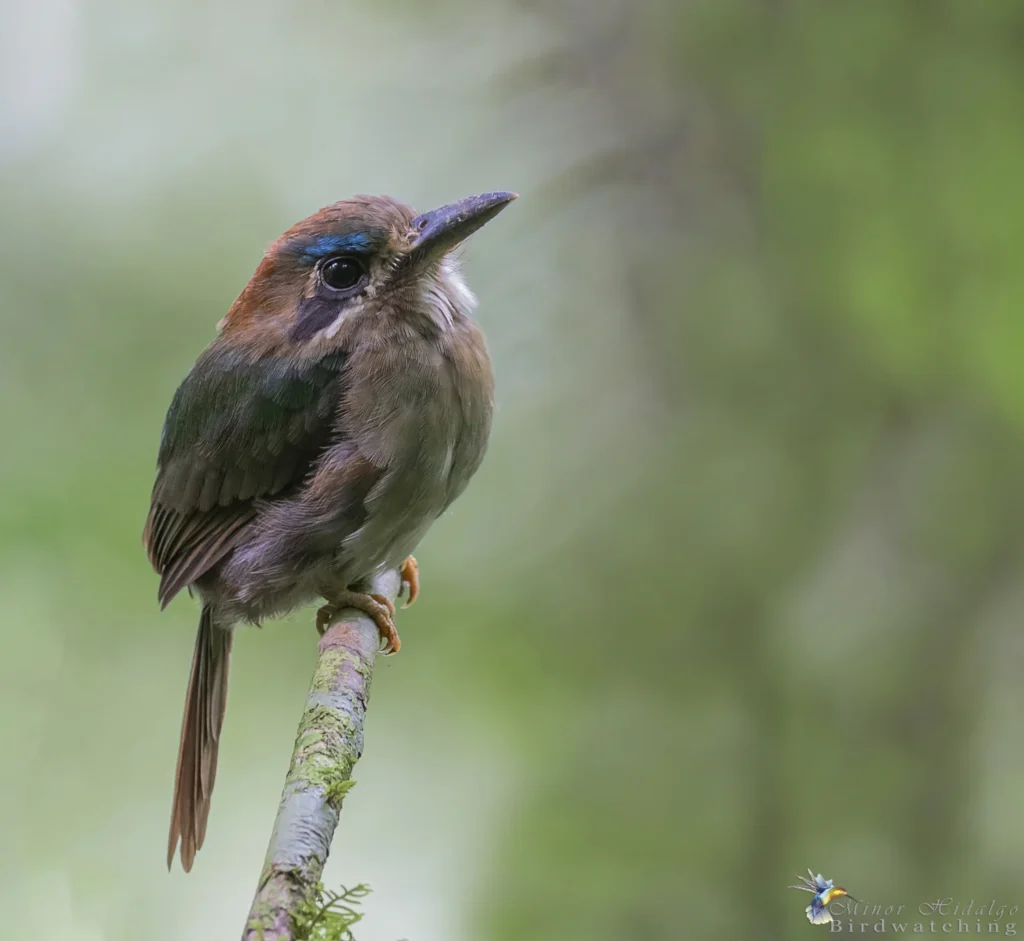
The Tody Motmot is the smallest member of the motmot family, found in humid lowland and foothill forests from southern Mexico to northwestern Colombia, characterized by its diminutive size, bright green plumage with a rufous forehead, short tail with racket tips, and habit of perching quietly in the understory while sallying for insects.

Hylomanes momotula
Scientific Name
Momotidae (Motmots)
Family
Coraciiformes
Order
H. m. momotula
Subspecies. From southern Mexico to Nicaragua
H. m. chiapensis
Subspecies. Chiapas
Range and Habitat of Tody Motmot
Geographic Range
The Tody Motmot ranges from southern Mexico (Veracruz, Oaxaca, Chiapas) through Guatemala, Belize, Honduras, Nicaragua, Costa Rica, Panama, Colombia, western Ecuador, and northwestern Peru.
Migratory Patterns
This is a strictly sedentary species with no migratory movements. Individuals maintain small territories year-round with minimal dispersal.
Preferred Habitat
The Tody Motmot inhabits primary humid forests with intact understory, particularly near streams and ravines with dense vegetation. It prefers mature secondary forests with closed canopy, steep slopes with accumulated leaf litter and tangles, areas with abundant understory perches 1-5 meters high, and forest with minimal human disturbance. The species avoids forest edges and open areas.
Altitude Range
This is primarily a lowland to foothill species. In Costa Rica, it occurs from sea level to 1,200 m elevation, most commonly between 50-700 m. Rare records exist up to 1,500 m on the Caribbean slope.
Costa Rica Habitat
In Costa Rica, the species occurs primarily on the Caribbean slope from the Nicaraguan border south through the lowlands and foothills. On the Pacific slope, it occurs very locally in the Carara region and Osa Peninsula.
Conservation Status
Least Concern
Conservation Status
Population Status
Costa Rican populations appear healthy where habitat remains intact. Density in optimal habitat ranges from 2-4 pairs per km².
Major threats include deforestation and fragmentation of primary forest habitat, selective logging that opens the understory and reduces humidity, edge effects in forest fragments altering microclimate, stream pollution affecting prey availability, and climate change potentially affecting humid forest distribution.
Conservation efforts
The Tody Motmot is protected in several Costa Rican national parks and biological reserves.
Primary Threats
Major threats include deforestation and fragmentation of primary forest habitat, selective logging that opens the understory and reduces humidity, edge effects in forest fragments altering microclimate, stream pollution affecting prey availability, and climate change potentially affecting humid forest distribution.
Tody Motmot Identification
How to Identify the Species
Rarity Level:
UncommonBest Viewing Times:
Early Morning (Dawn - 8 AM)
Size
The Tody Motmot is the smallest motmot species, measuring only 16-17 cm in total length. Males weigh 28-32 g while females weigh 26-30 g.
Plumage
Adults display emerald-green upperparts with a bluish sheen on the crown and nape. The crown shows a distinctive rufous-chestnut central patch bordered by black, creating a striking head pattern. A black mask extends through the eyes to the ear coverts. The throat is whitish to pale buff, often with a faint greenish wash. The breast and belly are olive-green to greenish-gray, becoming paler toward the vent.
Distinctive Features
The absence of tail rackets distinguishes it from all other motmots. The relatively large head and short tail give it a distinctive compact, “tody-like” appearance. The bird often appears fluffy due to loose feather structure.
Sexual Dimorphism
Sexual dimorphism is minimal. Males and females are virtually identical in plumage, though males average slightly larger. The rufous crown patch may be marginally more extensive in males.
Diet and Feeding Behavior
Primary Diet
- The Tody Motmot feeds on a variety of small prey including insects such as beetles, crickets, katydids, and caterpillars. It also consumes spiders and their egg sacs, small snails, small lizards particularly anoles, tiny frogs and occasionally their eggs, and small fruits including berries and palm fruits.
Foraging Techniques
- This motmot employs a sit-and-wait hunting strategy, remaining motionless on low perches for extended periods. It makes quick sallies to capture prey from foliage or ground, typically returning to the same or nearby perch.
Feeding Times
- Peak foraging occurs during early morning from 5:30-8:00 and late afternoon from 15:00-17:30. The species remains active during light rain when prey is active but reduces activity during heavy downpours and midday heat.
Behavior Patterns
Tody Motmot
Social Structure
These motmots are typically solitary or found in pairs during breeding season. Pairs maintain year-round bonds in some cases. Family groups may remain together for several weeks post-fledging. The species rarely joins mixed-species flocks, preferring solitary hunting.
Song and Vocalization
The Tody Motmot has a distinctive vocal repertoire. The primary call is a hollow, resonant “whoop-whoop-whoop” series, typically 3-6 notes, lower-pitched than expected for the bird’s size. It produces a soft rolling “purrrt” or trill during close contact between mates and a sharp “kek” or “tik” alarm note when disturbed. Dawn calling is most pronounced during breeding season.
Courtship and Mating Ritual
Courtship involves males calling from regular perches within territory. Both sexes perform mutual preening, particularly around the head. Males present food items to females during courtship feeding. Pairs engage in synchronized calling from nearby perches.
Territoriality
Pairs defend territories of 2-4 hectares year-round. Territorial advertisement consists primarily of vocal displays from established perches.
Birdwatching Tips
Best Locations for Spotting Tody Motmot
Prime sites include
- La Selva Biological Station (especially CES and CCL trails)
- Braulio Carrillo National Park (Quebrada González sector)
- Rara Avis Reserve forest trails
- Selva Verde Lodge primary forest trails
- Centro Manu near La Selva
- Tirimbina Biological Reserve
- Cope Arte trail near Guápiles
- Hitoy-Cerere Biological Reserve
Best Time of the Year
Best observed from March to June during breeding season when most vocal. Dawn hours from 5:30-7:00 offer peak vocal activity.
Common Behavior
This is a challenging species to observe due to its small size and secretive nature. Listen for hollow “whoop” calls from forest interior at dawn. Look for small, still birds on horizontal perches 1-4 meters high.
Recommended Gear
Essential equipment includes high-quality 8×42 or 10×42 binoculars for dark forest conditions.
Breeding and Nesting Behavior
Breeding Season
Breeding occurs during the early wet season in Costa Rica, with nesting activity from March to July and peak activity in April-May when insect prey is most abundant.
Nesting Sites
Like other motmots, the Tody Motmot nests in burrows, but these are notably smaller than those of larger species. The tunnel measures 30-60 cm long, excavated in earthen banks, roadside cuts, or stream banks. Nests are often placed lower than those of other motmots, sometimes only 0.5-2 meters above ground.
Clutch Size
Females lay 2-3 white eggs, typically 3.
Incubation Period
20-21 days
Parental Care
Both parents share incubation duties and feeding of nestlings. Young are fed insects and small vertebrates at frequent intervals. Fledging occurs at 24-26 days. Post-fledging care continues for 3-4 weeks as young learn foraging techniques.
Did You Know?
Interesting Behaviors
Despite lacking tail rackets, Tody Motmots still perform subtle tail-pumping behaviors like their larger relatives. The bird can remain motionless for over 20 minutes while hunting.
Cultural Significance
The name “momotillo” (little motmot) reflects its status as the smallest family member. Indigenous peoples of the Caribbean lowlands considered it a forest guardian spirit.
Surprising Traits
Despite its small size, it can swallow prey items up to 40% of its body length. The species shows remarkable spatial memory, navigating through dense understory along established routes.
How do I identify this bird?
Look for the smallest motmot (only 17 cm), lacking the long tail with racket tips of other motmots. Key features include the rufous crown patch bordered by black, green overall coloration, and compact “tody-like” appearance. The hollow “whoop” call is distinctive.
Where is the best place to see it in Costa Rica?
La Selva Biological Station offers the best chances, particularly along forest trails in early morning. Braulio Carrillo National Park’s Quebrada González sector and Rara Avis Reserve are also reliable. Focus on intact Caribbean slope forests with good understory below 700 m elevation.
Is it endangered?
Listed as Least Concern, but the species requires primary or mature secondary forest with intact understory. It’s sensitive to habitat disturbance and has declined in fragmented landscapes. The Tody Motmot serves as a good indicator of forest health.