
Pinnated Bittern
The Pinnated Bittern, also known as the South American Bittern, is a secretive heron species inhabiting wetlands across Central and South America. In Costa Rica, this elusive bird is usually found in dense marshes and reed beds. The Pinnated Bittern is a classic example of a “birder’s bird”; highly sought after but hard to find.…

Botaurus pinnatus
Scientific Name
Ardeidae (Herons, Egrets, and Bitterns)
Family
Pelecaniformes
Order
B. p. caribaeus
Subspecies. Found in southeastern Mexico and Belize.
B. p. pinnatus
Subspecies. Ranges from southeastern Nicaragua through Central and South America, including Costa Rica.
Range and Habitat of Pinnated Bittern
Geographic Range
The Pinnated Bittern’s range extends from southeastern Mexico through Central America to northern Argentina. In Costa Rica, it is primarily found in the northern lowlands, especially in wetland areas.
Migratory Patterns
Generally non-migratory in the northern parts of its range, including Costa Rica. Some southern populations may exhibit migratory behavior during breeding seasons.
Preferred Habitat
Prefers freshwater wetlands with dense vegetation such as reeds, cattails, and sedges. Also found in flooded pastures and agricultural fields like rice paddies.
Altitude Range
Primarily inhabits lowland areas; in Costa Rica, observed from sea level up to 600 meters.
Costa Rica Habitat
In Costa Rica, notable sites include the Medio Queso Wetlands in Alajuela Province and Palo Verde National Park in Guanacaste Province. These areas provide the dense marsh vegetation preferred by the species.
Conservation Status
Least Concern
Conservation Status
Population Status
Considered stable across its range. However, due to its secretive nature, exact population numbers are difficult to determine.
Habitat loss due to wetland drainage, agriculture, and development. Pollution and climate change also pose risks.
Conservation efforts
Protected under various national and international conservation frameworks. Presence in several protected areas, such as Palo Verde National Park, aids in its conservation.
Primary Threats
Habitat loss due to wetland drainage, agriculture, and development. Pollution and climate change also pose risks.
Pinnated Bittern Identification
How to Identify the Species
Rarity Level:
UncommonBest Viewing Times:
Early Morning (Dawn - 8 AM), Evening (Dusk)
Size
Length: Approximately 66–76 cm (26–30 inches) Weight: Ranges from 554 to 1,157 grams (1.2 to 2.6 pounds)
Plumage
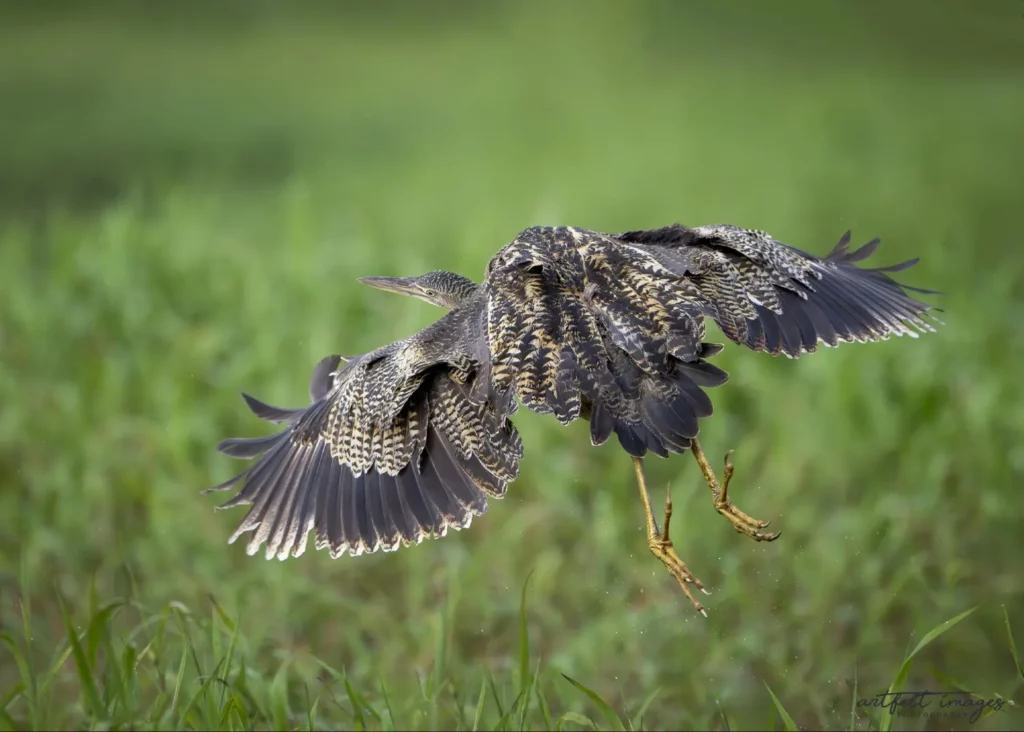
Buffy-brown with heavy streaking and barring; cryptic patterning provides excellent camouflage in wetland vegetation.
Distinctive Features
Stout yellowish bill with a dusky upper mandible; bright yellow facial skin; greenish-yellow legs; slate-grey flight feathers create a two-toned effect in flight.
Sexual Dimorphism
Minimal; females are generally smaller with brown tail feathers, while males have black tails.
Diet and Feeding Behavior
Primary Diet
- Feeds on fish, amphibians, reptiles, insects, crustaceans, mollusks, and small mammals.
Foraging Techniques
- Employs a "stand and wait" strategy, remaining motionless before striking prey with a rapid thrust of the bill.
Feeding Times
- Primarily nocturnal; most active during dawn and dusk.
Behavior Patterns
Pinnated Bittern
Social Structure
Solitary; occasionally seen in loose groups in areas with abundant food.
Song and Vocalization
Males produce a deep booming call during the breeding season, especially at dusk and night.
Courtship and Mating Ritual
Limited information; presumed to involve vocal displays and territorial behavior.
Territoriality
Males are territorial during the breeding season, using vocalizations to establish dominance.
Birdwatching Tips
Best Locations for Spotting Pinnated Bittern
In Costa Rica, prime locations include the Medio Queso Wetlands and Palo Verde National Park. These areas offer the dense marsh vegetation preferred by the species.
Best Time of the Year
Wet season (May to November) when birds are more active and vocal.
Common Behavior
Look for individuals standing motionless among reeds; they may flush when approached closely.
Recommended Gear
Binoculars with good low-light performance; spotting scope for distant views; field guide for identification; insect repellent for wetland areas.
Breeding and Nesting Behavior
Breeding Season
April-August, peaking May-July in freshwater marshes
Nesting Sites
Platform nests built 1-3 feet above water in dense cattails or bulrushes, lined with fine plant material
Clutch Size
Typically 4 olive-brown eggs
Incubation Period
28-29 days, female only
Parental Care
Female provides all care. Chicks fledge at 6-7 weeks, remain with mother several additional weeks while learning to hunt.
Did You Know?
Master of Camouflage
When threatened, the Pinnated Bittern freezes with its bill pointed upward and sways gently to mimic reeds in the wind. Its streaked brown plumage perfectly matches dried marsh vegetation, making it nearly invisible even when standing in plain sight.
Vocal Ventriloquist
Males produce a deep, resonant booming call that can be heard up to 3 miles away. This low-frequency sound is so deep it’s often felt as much as heard, and the bird can throw its voice to make the sound seem to come from different directions.
Flexible Neck Anatomy
These birds have 20-21 cervical vertebrae (compared to most birds’ 13-14), giving them an extraordinarily flexible neck that allows them to strike at prey with lightning speed while keeping their body perfectly still.
Wetland Indicator
Pinnated Bitterns are considered excellent indicators of healthy wetland ecosystems. Their presence signals high-quality marsh habitat with minimal human disturbance, making them valuable for conservation monitoring.
Secretive Lifestyle
They’re so reclusive that many experienced birders have never seen one in the wild. They prefer to walk slowly through dense vegetation rather than fly, and typically feed at dawn and dusk when they’re least likely to be spotted.
Range Wanderers
Unlike many waterbirds, Pinnated Bitterns can show up in unexpected places during migration, sometimes appearing in small urban ponds or agricultural areas far from their typical large marsh habitats.