Fork-tailed Flycatcher
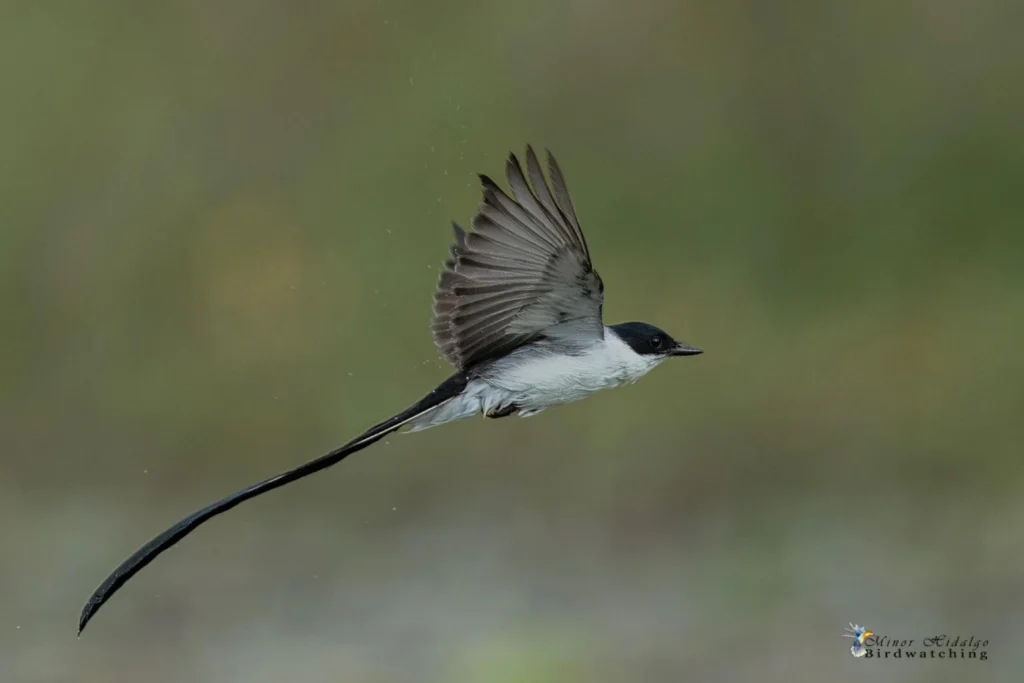
The Fork-tailed Flycatcher is a striking, elegant tyrant flycatcher found in open and semi-open habitats from southern Mexico through South America, distinguished by its extremely long, deeply forked black tail streamers, black cap, white underparts, and gray back, with some populations undertaking remarkable long-distance migrations covering thousands of kilometers.

Tyrannus savana
Scientific Name
Tyrannidae (Tyrant Flycatchers)
Family
Passeriformes
Order
T. s. monachus
Subspecies. Southern Mexico (Veracruz) to Colombia, the Guianas, and northern Brazil
T. s. sanctaemartae
Subspecies. Northern Colombia and northwest Venezuela
T. s. circumdatus
Subspecies. East-central Brazil (lower Amazonian Brazil west to Manaus area)
T. s. savana
Subspecies. Central and southern South America and the Falkland Islands
Range and Habitat of Fork-tailed Flycatcher
Geographic Range
Found from southern Mexico south to central Argentina, including Trinidad and Tobago, Belize, Costa Rica, Guatemala, Honduras, Nicaragua, Panama, Ecuador, Chile, Bolivia, Brazil, Colombia, Guyana, Paraguay, Peru, Suriname, Uruguay, and Venezuela
Migratory Patterns
Northern populations near southern Mexico (including Costa Rica visitors) tend to be permanent residents or short-distance migrants, while fork-tailed flycatchers from further south are long-distance migrants with a reputation for wandering as far north as New Brunswick, Canada
Preferred Habitat
Wide variety of habitats including pastures, riparian forests, forest edges, mangroves, shrubland, savanna, lightly forested areas, grasslands, and open residential areas with scattered trees
Altitude Range
Global: Usually found below 1000 m elevation, but during migration may be found in an even broader range of habitats
Costa Rica: Sea level to 1000 m elevation in suitable open habitatsCosta Rica Habitat
Present throughout Costa Rica below 1000 m elevation. Documented sightings include areas near Rincón de la Vieja and northern Costa Rica during birding expeditions. Found in provinces with suitable open habitat including Guanacaste, Puntarenas, and lowland areas of San José and Alajuela provinces.
Conservation Status
Conservation Status
Least Concern
Population Status
While exact population numbers are not available, the species is described as "common" in much of its range. The population size is extremely large and the population trend appears to be stable
Particularly vulnerable to habitat loss driven by agriculture, urban expansion, cattle grazing, and climate change
Conservation efforts
Organizations like BirdLife International monitor its status and advocate for habitat preservation.
Primary Threats
Particularly vulnerable to habitat loss driven by agriculture, urban expansion, cattle grazing, and climate change
Fork-tailed Flycatcher Identification
How to Identify the Species
Rarity Level:
CommonBest Viewing Times:
Early Morning (Dawn - 8 AM), Late Morning (8 AM - 11 AM), Midday (11 AM - 2 PM), Afternoon (2 PM - 5 PM)
Size
Males: 37–41 cm (15–16 in) in length, Females: 28–30 cm (11–12 in) in length; Weight: 28–32 g (0.99–1.13 oz)
Plumage
- Adult Males and Females: White below, gray above, with a distinctive black cap. Males sometimes show a yellow crown stripe
- Juveniles: Significantly shorter tails and brownish-colored heads instead of black caps
Distinctive Features
- Males have an extremely long, forked tail, of even greater length than that of the related scissor-tailed flycatcher
- The tail in adult males is two to three times longer than the length of the bird from the bill to the base of the tail
- Beak is relatively short and flat
- Wings are darker, sooty black, with a noticeable white stripe
- Eyes are brown
Sexual Dimorphism
Males are generally larger than females and have much longer, more deeply forked tail feathers. Females have somewhat shorter tails. Males' tail feathers are shorter when molting as new feathers grow in.
Diet and Feeding Behavior
Primary Diet
- Primarily insectivorous, feeding on flying arthropods including flies, beetles, moths, and butterflies. Will switch to berries and small fruits during winter if insects become scarce
Foraging Techniques
- Sally from perches to eat flying insects or glean them off leaves and fruit. They employ a hawking strategy, darting from perches to snatch prey in mid-air, often returning to the same perch. Use a "hawk and wait" hunting strategy where they perch on tree branches or fencing, awaiting flying insects to pass by before flying swiftly to catch them mid-air
Feeding Times
- Diurnal (active during the day), often seen perched high in the canopy scanning for prey
Behavior Patterns
Fork-tailed Flycatcher
Social Structure
Solitary birds outside the breeding season but will join loosely organized flocks during migration. During migration, fork-tailed flycatchers are quite gregarious, forming flocks of up to 10,000 individuals
Song and Vocalization
Have a dry, buzzy call, and a weak “tic-note” while in flight. Distinctive call is a squeaky, high-pitched “peeer” or “wheer”. Their wings make a distinct whistling note while flying overhead, with research showing differences in pitch between subspecies
Courtship and Mating Ritual
Males perform aerial courtship displays involving swirling somersaults, twists, and flips, accompanied by buzzing calls to impress female counterparts. Males’ long tail feathers are also used to impress potential mates. During courtship, males impress females with an aerobatic display, flying high into the sky, and then plummeting downward with their tails spread wide
Territoriality
Very aggressive birds when defending territory. During migration, have been observed flying with eastern kingbirds and aggressively chasing off predators
Birdwatching Tips
Best Locations for Spotting Fork-tailed Flycatcher
- Guanacaste Province lowlands and savannas
- Northern Costa Rica areas including regions near Rincón de la Vieja
- Open areas with scattered trees below 1000m elevation
- Rice fields and agricultural areas with suitable perching sites
- Coastal mangrove edges
Best Time of the Year
Year-round resident/visitor in Costa Rica, but sightings documented during April-May birding seasons in northern Costa Rica suggest consistent presence during dry season months
Common Behavior
Frequently observed on conspicuous perches, including fence posts, low bushes, and even on the ground. Perches prominently on the top of fence posts or shrubs. At times seen in small flocks. Flight is strong and direct, with tail sweeping behind
Recommended Gear
Binoculars: 8×42 or 10×42 for distant observation
Camera: Telephoto lens 300mm+ for photography
Breeding and Nesting Behavior
Breeding Season
Breeding seasons depend on subspecies and location; breeding season ranges from late summer to mid-winter. Breeding occurs during the austral summer (October to January) in the southern parts of its range
Nesting Sites
Shallow cup nests built with plant fibers, grasses, leaves and bark shreds, lined with down, soft plant fibers and hair. Built 1–10 m high in a shrub or short tree, typically 2–10 meters (6.6–33 feet) above the ground
Clutch Size
1–3 eggs
Incubation Period
10-13 days
Parental Care
The female builds the cup-shaped nest.
Did You Know?
Interesting Behaviors
Though small and light, can reach speeds up to 65 miles per hour (105 km/h) and stop/turn impressively quickly using their long tails. The tail of males can be up to 60% of their total body length, especially during breeding season
Cultural Significance
In some cultures, the sighting of this bird is believed to herald rain. In Spanish-speaking regions, they are sometimes referred to as “tesourinha,” which translates to “little scissors,” referencing their unique tail shape
Surprising Traits
Research has uncovered differences in the pitch of whistling noises by different subspecies, supporting a hypothesis that fork-tailed flycatchers are splitting into two species, as nonmigratory birds have much-lower-pitched whistling notes than the migrators
How do I identify this bird?
Look for a striking and conspicuous large flycatcher with black head, pale gray back, and extremely long forked tail (in adults). No pink in plumage unlike the similar Scissor-tailed Flycatcher. Juveniles have shorter tails but still look distinctive
Where is the best place to see it in Costa Rica?
Open savannas, grasslands, and agricultural areas in Guanacaste Province, coastal lowlands, and areas with scattered trees below 1000m elevation. Northern Costa Rica regions have documented sightings during birding expeditions
Is it endangered?
No, it is categorized as ‘Least Concern’ by the IUCN Red List with relatively populous and stable numbers across a broad distribution range