Agami Heron
Agami Heron is a secretive, Near Threatened forest heron that occurs in lowland wet forests and swamps from southern Mexico through Costa Rica to much of Amazonia, where it nests colonially in flooded forest and mangroves.
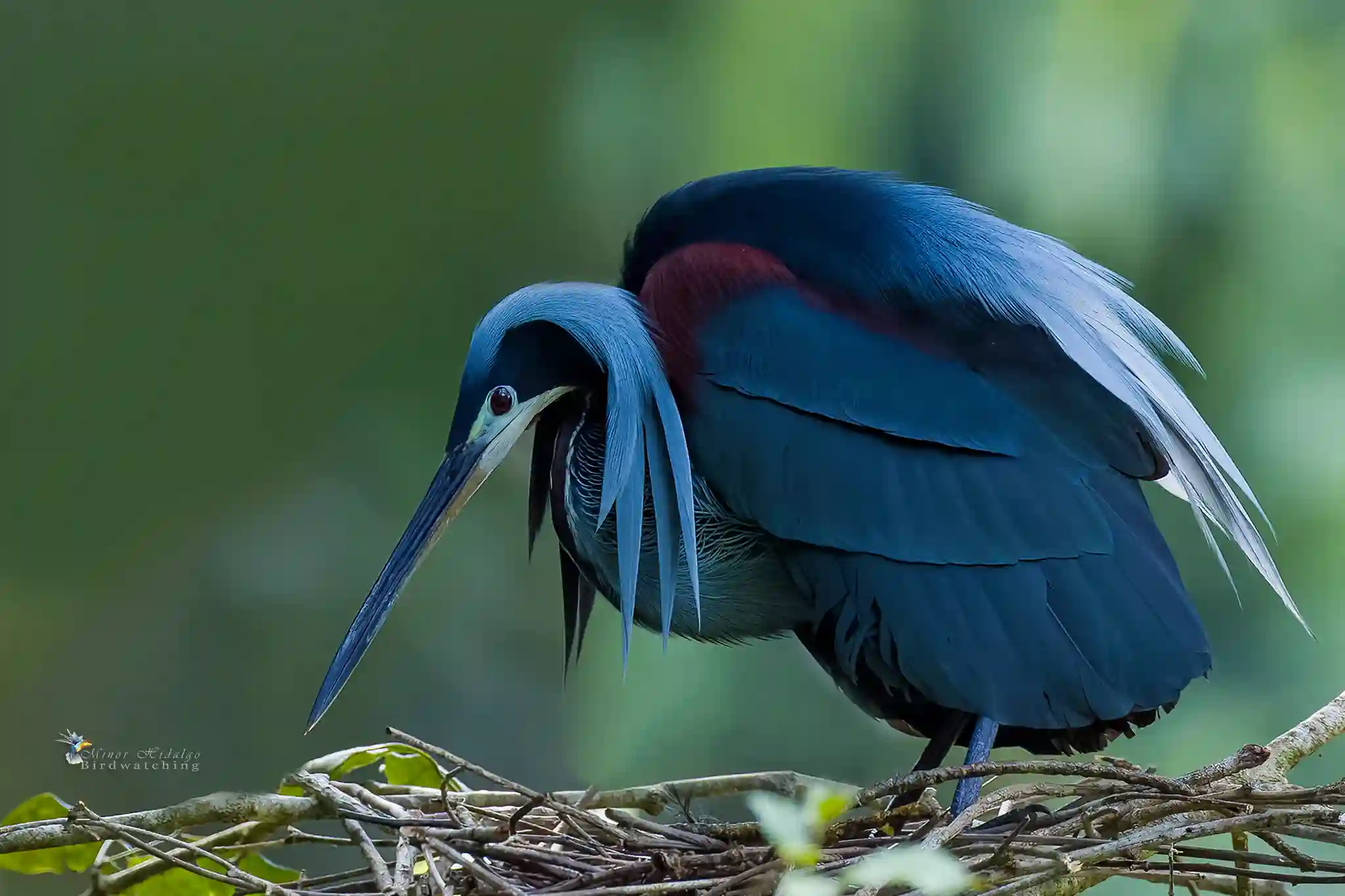
Agamia agami
Scientific Name
Ardeidae (herons and bitterns)
Family
Pelecaniformes
Order
Range and Habitat of Agami Heron
Geographic Range
Neotropical, from southeast Mexico through Central America (Guatemala to Panama, including Costa Rica) and across much of the Amazon Basin and Guiana Shield in South America (e.g., Colombia, Venezuela, Guyanas, Brazil, Peru, Bolivia).
Migratory Patterns
Largely resident throughout most of its range, though some regional dry‑season movements are reported (e.g., seasonal records in Panama suggest local movements between January and June).
Preferred Habitat
Interior swamp forests, mature lowland rainforest along slow streams, mangroves, black‑water lagoons, and secluded freshwater wetlands.
Avoids open wetlands; typically keeps to shaded, overhung channels and flooded forest edges.Altitude Range
Mostly from sea level up to about 300 m; there are occasional records as high as about 2,600 m in the Andes. In Costa Rica it is essentially a lowland Caribbean species from near sea level to low foothills.
Costa Rica Habitat
Occurs mainly in Caribbean lowlands where extensive swamp forest, quiet black‑water streams, and flooded forest remain; the species is local and hard to see but regularly recorded at suitable sites in lowland wet forest reserves.
Conservation Status
Conservation Status
Near Threatened
Population Status
Classified as Near Threatened with suspected continuing decline, largely due to ongoing and future loss and degradation of lowland forest wetlands.
Deforestation and drainage of swamp forests, black‑water lagoons, and riverine forest.
Conservation efforts
Several known nesting colonies lie within protected areas, including Pacuare Nature Reserve in Costa Rica, Tapiche Reserve in Peru, and reserves in French Guiana.
Primary Threats
Deforestation and drainage of swamp forests, black‑water lagoons, and riverine forest.
Agami Heron Identification
How to Identify the Species
Rarity Level:
RareBest Viewing Times:
Size
Length about 66–76 cm. Body height roughly 0.6–0.76 m, with a long, very slender bill about 14–15 cm (around one‑fifth of body length). Weight typically between about 0.5–1 kg.
Plumage
Chestnut neck and underparts with a clean white line down the center of the fore‑neck; upperparts dark glossy green to blue‑green; long, wispy pale blue plumes on crown, foreneck sides, and lower back give a very ornate appearance. Bill long and very thin, dull yellow to horn; facial skin and legs dull yellow turning more reddish in the breeding season.
Distinctive Features
Very long, dagger‑like bill; short legs relative to other large herons; low crouched stance. Striking color contrast of chestnut breast and neck with dark teal‑green wings and pale blue ornamental plumes makes this heron uniquely patterned.
Sexual Dimorphism
Sexes appear similar in plumage; available sources describe no strong color difference, with only minor size differences typical of herons.
Diet and Feeding Behavior
Primary Diet
- Primarily feeds on small fish taken in shaded streams and pools. Also takes aquatic invertebrates, amphibians, and other small aquatic prey similar to other forest herons.
Foraging Techniques
- Very slow, stealthy hunter, often standing motionless in deep shade at stream edges and striking with its extremely long bill.
Feeding Times
- Feeds mostly in dim light under forest canopy; many observations are at dawn, dusk, or on overcast days when shaded creeks are darkest.
Behavior Patterns
Agami Heron
Social Structure
Typically solitary or in pairs while foraging along forest streams.
Highly social when nesting, forming medium to very large colonies that may include hundreds of nests.Song and Vocalization
Generally quiet; vocalizations are mainly low croaks and grunts given around colonies and when disturbed, not loud flight calls like some open‑country herons.
Courtship and Mating Ritual
Colonial nester; males arrive at colonies first, defend a small territory, and display to females with plumage fluffing and bill‑pointing near the nest site, as described for the species’ colonial behavior.
Territoriality
Defends small nest territories within dense colonies, but foraging areas are less aggressively defended and may overlap along streams and wetlands.
Birdwatching Tips
Best Locations for Spotting Agami Heron
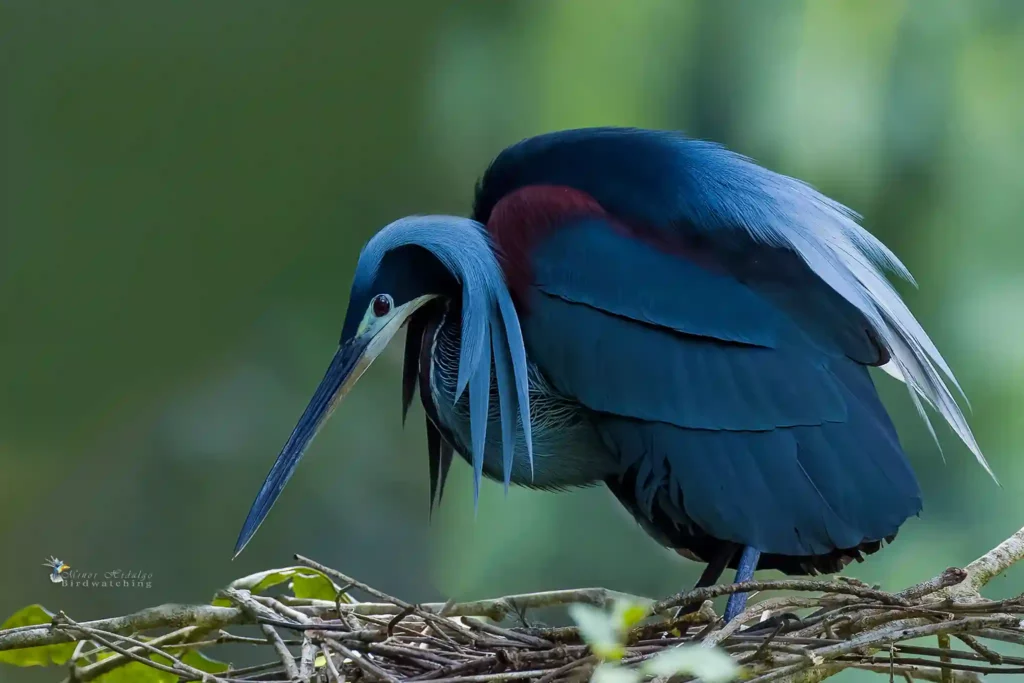
Pacuare Nature Reserve on the Caribbean coast hosts a major known colony on a small island in a lagoon. Other suitable places are little‑disturbed lowland Caribbean forests and black‑water creeks in protected areas with extensive swamp forest.
Best Time of the Year
Best during the rainy season when colonies are active and water levels in forest streams and lagoons are high; local reports focus on the main wet months for lowland Caribbean Costa Rica.
Common Behavior
Look for a very quiet, cryptic heron standing in deep shade along narrow forest streams; it often remains motionless and may be detected only when it moves its long neck or bill. At colonies, birds commute low over water to and from nests, offering better views than along closed streams.
Recommended Gear
8×42 binoculars are recommended for low‑light forest observation; a camera with good high‑ISO performance and telephoto lens helps in the dark understory.
Breeding and Nesting Behavior
Breeding Season
Nests mainly in the wet season; detailed life‑history sources report nesting between roughly June and September in much of the range. In Costa Rica, the large colony documented in Pacuare Nature Reserve also falls within the local rainy season, consistent with this timing.
Nesting Sites
Builds platform nests of sticks in bushes or trees over water, typically hidden under dense canopy. Nests average around 15 cm in diameter and 8 cm in height, loosely built yet thick twig platforms.
Clutch Size
Usually 2–4 pale blue eggs.
Incubation Period
Around 3–4 weeks
Parental Care
Both parents participate in nest building, incubation, shading eggs, and feeding chicks, consistent with patterns reported for colonial herons.
Did You Know?
Interesting Behaviors
This species’ extremely long bill allows it to strike at prey from farther away than similar‑sized herons, an adaptation noted in detailed morphological studies.
Cultural Significance
In Brazil one common name is Soco beija‑flor (“hummingbird heron”) because of its ornate coloration and delicate appearance.
Surprising Traits
Agami Heron is the only member of its genus Agamia and represents part of an ancient basal lineage of herons along with boat‑billed and tiger herons.
How do I identify this bird?
Look for a medium‑sized, short‑legged forest heron with chestnut neck and underparts, dark green‑blue wings, pale blue ornamental plumes, and a very long thin bill, usually in dark, forested waterways.
Where is the best place to see it in Costa Rica?
Pacuare Nature Reserve on the Caribbean coast is a key site, with a nesting colony on a small island in a lagoon; other chances are in remote Caribbean lowland swamp forests and quiet black‑water streams.
Is it endangered?
It is listed as Near Threatened rather than fully Endangered, but its specialized lowland wet‑forest habitat and colonial nesting make it vulnerable to future habitat loss and disturbance.